Many people understand the Year of the Buffalo as a year of hard work. However, in the Vietnamese psyche, the buffalo is not just a zodiac animal but is also associated with a broader worldview. In the 12-animal zodiac system, the buffalo is second, after the rat, a position that suggests a transition from beginnings to labor and building.
Rooted in a rice-based agricultural system, the buffalo became a foundation of production and daily life, gradually taking on profound cultural meanings. Therefore, when speaking of the Year of the Buffalo, Vietnamese people are referring not only to time but also to a period of labor, accumulation, and stability in life.
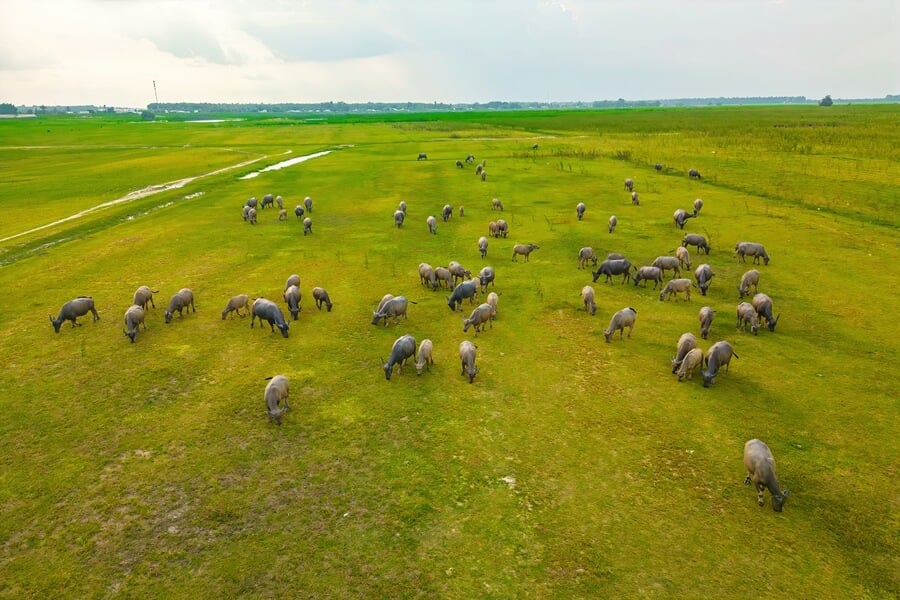
Table of Content:
- The Buffalo in Agriculture
- From Animal to Cultural Symbol
- The Year of the Buffalo
- The Buffalo in Spiritual Life and Beliefs
- Cultural Meaning of the Buffalo
- Experiencing the Buffalo in Vietnam
- Conclusion
1. The Buffalo – The Foundation of Vietnamese Agricultural Life
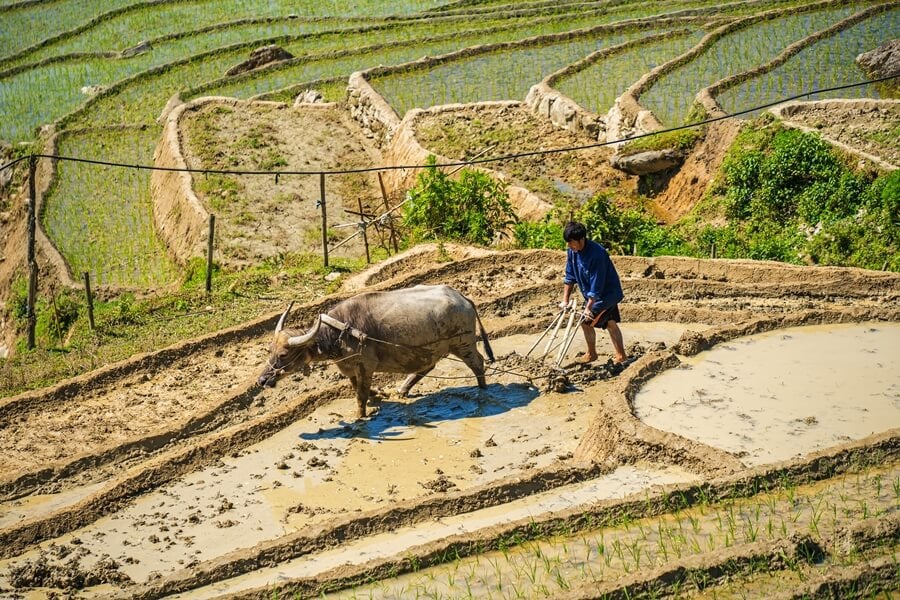
In the structure of traditional agricultural life, the buffalo holds a central position. Observing its role in daily tasks, it is clear that the buffalo is directly linked to production activities and shapes the rhythm of farmers’ lives. From this role, the image of the buffalo gradually expanded, becoming part of how Vietnamese people perceive labor and life.
1.1 The Buffalo – A Comprehensive Production Tool
To understand why the Year of the Buffalo carries so much meaning, one can look at the reality of Vietnamese life: the buffalo was once at the center of production activities. This is clearly demonstrated through farming methods that have been maintained across generations.
In the rice paddies, the buffalo participates in almost all important stages. From plowing, tilling, and harrowing to pulling furrows, everything is tied to its strength. After the harvest season ends, buffaloes continue to pull carts, carrying rice and transporting materials for daily life. The image of “buffaloes leading the way, plows following behind” reflects a familiar process in which humans rely on the buffalo’s strength to work the land and create production.
Therefore, the buffalo becomes the primary driving force of traditional agriculture, closely connected to the entire labor cycle in the fields.
1.2 Buffaloes – A Living Asset of the Family
From its role in production, the buffalo gradually came to be seen as a form of living asset with practical value in family life. Its value is directly linked to its ability to support livelihoods and sustain production.
For farmers, the saying “the buffalo is the foundation of their livelihood” reflects lived experience. With buffaloes, farming becomes more reliable; with cultivated fields, food sources are secured. The presence of the buffalo supports livelihoods and contributes to important milestones such as marriage and family formation.
Therefore, the buffalo plays a crucial role as the economic foundation of rural households, closely tied to stability and the ability to sustain life.
1.3 The Buffalo – A Companion
Beyond its economic value, the buffalo is also closely and consistently connected to human life. This bond is formed through shared labor, repeated in the rhythm of agricultural life.
From early morning, when the sky is still misty, people and buffalo go to the fields together. On scorching hot days or in harsh weather, both work under the same conditions. People care for the buffalo, keeping it warm in the cold and maintaining its shelter; the buffalo supports people in production. This interaction creates a relationship built on mutual support and companionship.
Over time, the buffalo has become a working partner, a labor companion, and a familiar presence in Vietnamese agricultural life.
2. From Animal to Cultural Symbol of the Vietnamese People
When entering spiritual life, the buffalo takes on new layers of meaning. From its role in production, this image gradually becomes associated with the emotions, memories, and ways Vietnamese people express their relationship with the world around them. This transformation carries the buffalo from material life into a cultural symbol in Vietnam.
2.1 Personification of the Buffalo
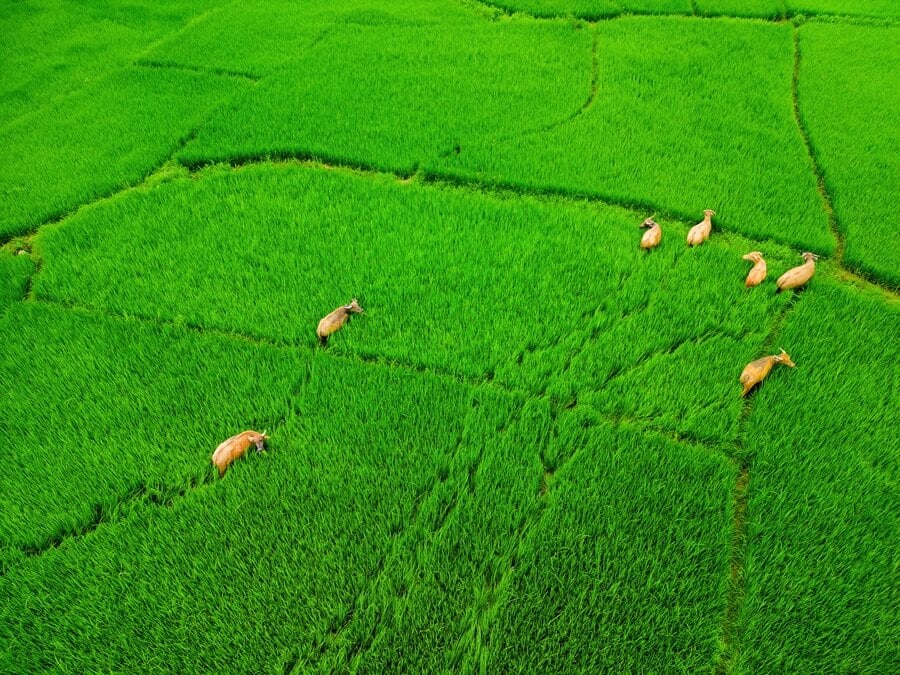
In Vietnamese culture, the buffalo appears as a familiar presence, capable of interaction and shared experience. Folk songs such as “Buffalo, I’m telling you this…” show how people call out to and communicate with buffaloes in an intimate tone. This way of addressing the animal creates a sense of closeness, where people place themselves on equal footing with a being they interact with daily.
The buffalo is associated with familiar qualities such as gentleness, patience, and perseverance. It is accustomed to work, closely tied to the rhythm of labor, and present as a stable part of life. When an animal is named, spoken to, and given human-like qualities, it assumes a different role, becoming a meaningful presence in spiritual life.
2.2 The Buffalo – A Model of the Vietnamese People
From the characteristics associated with the buffalo, Vietnamese people develop a system of associations about human qualities: diligence, hard work, and perseverance. These include working consistently, without ostentation, and maintaining a steady rhythm in both labor and life.
The choice of the buffalo as a familiar image reflects a clear value system. Perseverance and the ability to endure over time are highly regarded, along with a spirit of continuous effort. These qualities are not only associated with the buffalo but also become standards by which people evaluate themselves.
Therefore, the image of the buffalo reflects both labor and the way Vietnamese people define essential qualities in life.
2.3 Buffaloes in Art and Collective Memory
The image of the buffalo continues to be preserved in art and collective memory. From folk paintings to poetry, buffaloes appear in association with familiar rural landscapes.
The image of a shepherd sitting on the back of a buffalo, playing a flute in the fields, creates a gentle and unhurried scene. Sound, rhythm, and space blend together, evoking a sense of peace. These images are repeated across many art forms, becoming part of shared cultural memory.
Through this process, the buffalo is associated not only with production but also with a way of life: one that is simple, stable, and guided by its own rhythm, remembered and preserved across generations in cultural consciousness.
3. The Concept of the Year of the Buffalo in Vietnamese Life
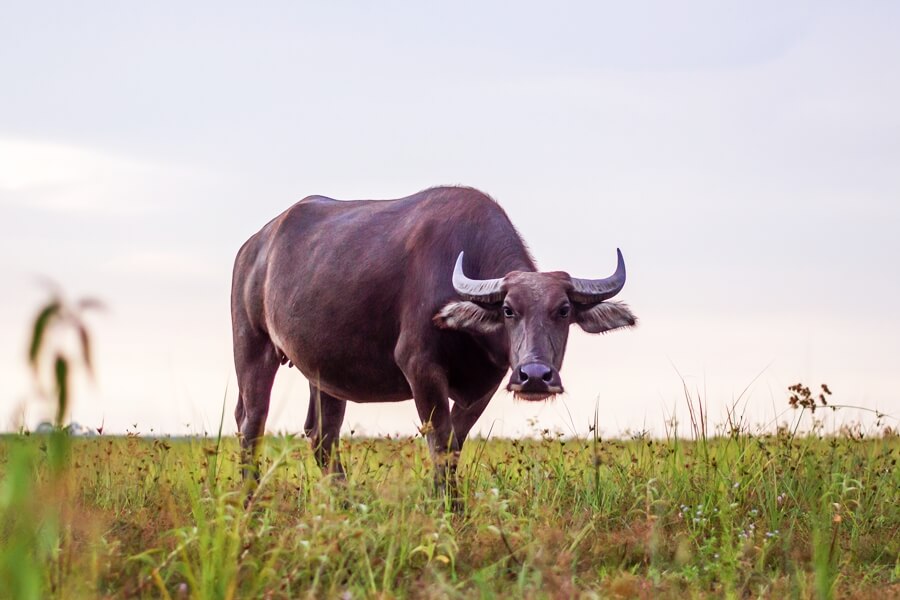
In the 12-animal zodiac cycle, the Year of the Buffalo appears as a continuation after the beginning, associated with labor, accumulation, and building. From this position, the Year of the Buffalo is often understood as a transition from beginnings to maintenance and development. Expectations associated with this year are therefore concrete, leaning toward stability and sustainability rather than sudden change.
3.1 The Year of Labor and Accumulation
In popular belief, the Year of the Buffalo is associated with labor carried out consistently over time. The working rhythm of the buffalo, slow, steady, and continuous, has become a familiar image for how people organize their work and lives.
Work is done step by step, gradually accumulating results. Achievements are formed through a process of repeated effort rather than appearing in a short period of time. This perspective aligns with agricultural experience, where efficiency depends on perseverance and maintaining a steady rhythm.
Therefore, the Year of the Buffalo is seen as a suitable period to focus on labor and accumulation, laying the foundation for further development.
3.2 The Year of Stability and Construction
The image of the buffalo moving along the plow with steady, deliberate steps suggests an approach that emphasizes certainty. This rhythm creates a sense of stability and reflects how Vietnamese people organize long-term tasks.
The Year of the Buffalo is often associated with plans that require time to complete, such as construction, business development, or stabilizing family life. Decisions are carefully considered, with priority given to sustainability over speed.
From this perspective, the Year of the Buffalo is seen as a suitable period to build a foundation and aim for stability in the medium and long term.
3.3 The Year of Recovery After Turmoil
In the agricultural cycle, plowing typically takes place after each harvest, preparing for a new phase. The image of the buffalo associated with this activity becomes a symbol of renewal.
Life experience shows that recovery after difficult periods requires time and perseverance. The Year of the Buffalo is often linked to processes of stabilization and reconstruction, in which activities are carried out step by step to restore balance.
Therefore, the Year of the Buffalo represents a transitional phase that supports adaptation and rebuilding after upheaval.
3.4 Folk Beliefs and Practical Behaviors
From the image of the buffalo, Vietnamese people have developed beliefs connected to daily life. These beliefs continue to influence how people make choices and act at important moments.
Choosing someone born in the Year of the Buffalo as the first visitor of the year reflects a desire for stability and reliability. In addition, expectations such as favorable weather and abundant harvests are also linked to the buffalo’s role in agricultural production.
These beliefs do not exist in isolation but are closely tied to specific behaviors. From symbolism to belief, and then to action, a chain of connections is formed, shaping how Vietnamese people perceive and begin a new year.
4. The Buffalo in Spiritual Life and Beliefs
When it leaves the sphere of production, the buffalo continues to appear in the spiritual life of the Vietnamese people in a different role. From its foundation as an animal closely associated with labor, this image expands into rituals, customs, and the ways people express their relationship with nature. Through this process, the buffalo becomes part of a belief system tied to agricultural life.
4.1 Festivals and Rituals
In many communities, the buffalo appears in rituals with a clearly defined role. This presence reflects how Vietnamese people connect production with spiritual life, while also expressing respect for the elements that sustain their livelihoods.
The Tich Dien ceremony is a typical example. The ritual of the king plowing the fields at the beginning of the year marks the start of the planting season and emphasizes the importance of agriculture in social life. In this context, the buffalo becomes central to the ritual, associated with plowing and preparing the land.
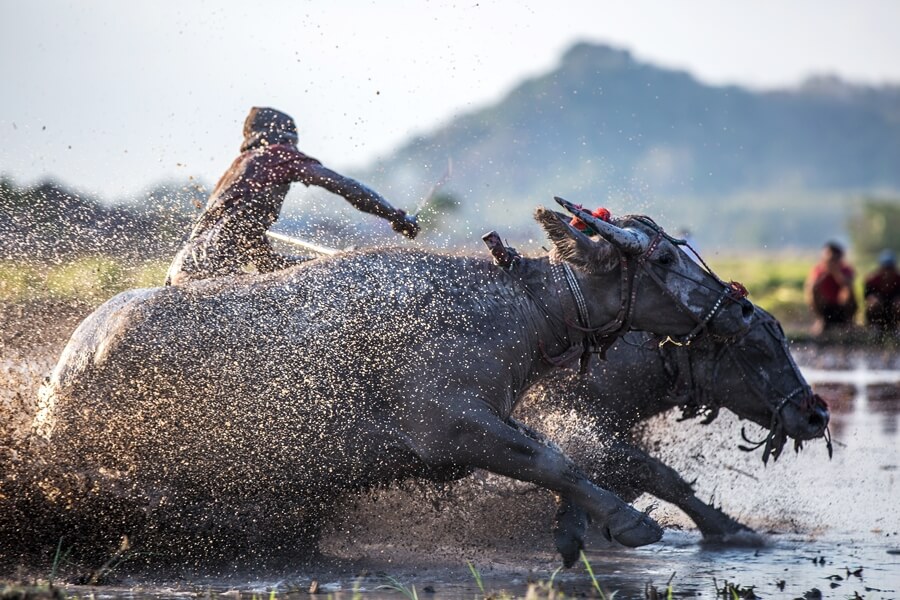
In other regions, practices such as buffalo fighting or buffalo worship are also maintained in various forms. Despite their differences, these activities all demonstrate that the buffalo holds a special position in community life. From this, the image of the buffalo is elevated to a higher level of meaning, associated with sacred elements and cultural traditions.
4.2 The Buffalo as a Bridge to Nature
In a production system dependent on natural conditions, people have developed many ways to connect with and adapt to the environment. The buffalo, through its direct role in farming, becomes a clear link between humans and nature.
Activities such as praying for good harvests or rain reflect the desire for favorable production conditions. These wishes are closely tied to the buffalo, an animal that works directly with the land, water, and seasonal cycles. In this way, the buffalo functions as an intermediary, connecting human activity with natural forces.
Therefore, in spiritual life, the buffalo carries not only symbolic meaning but also represents the harmonious relationship between humans and their environment, a relationship formed and sustained across generations.
5. Deeper Layers of Meaning: How Vietnamese People View the World Through the Image of the Buffalo
The image of the buffalo carries many layers of meaning that extend beyond labor. From its role in production and spiritual life, the buffalo gradually becomes a point of reference through which Vietnamese people perceive the world and organize their lives. Through this process, cultural values are formed, maintained, and passed down across generations.
5.1 Labor Culture
In the image of the buffalo, labor is associated with stability and continuity. Qualities such as perseverance, diligence, and endurance are reflected in a steady and uninterrupted work rhythm. The buffalo is linked to work completed step by step, shaping an approach that values process over immediate results.
From this perspective, labor is seen as a fundamental element of life. Value is built through accumulation, based on sustained effort over time. The image of the buffalo thus contributes to shaping a standard of work in Vietnamese culture.
5.2 Thinking in a Slow but Steady Way of Life
The rhythm of the buffalo’s movement suggests an approach that emphasizes certainty and stability. Each step remains steady, aiming for long-term goals rather than quick results.
This approach reflects a common mindset in life: prioritizing sustainability, minimizing risk, and maintaining balance throughout the process of development. Decisions are made with a long-term perspective, aligned with living conditions shaped by nature and agricultural production.
From this, the image of the buffalo becomes an expression of a way of life that is slow but steady, maintaining stability while moving forward.
5.3 Poeticizing Hardship
In agricultural life, labor is often associated with difficulty and challenge. However, these experiences are reinterpreted through art and memory with a different tone.
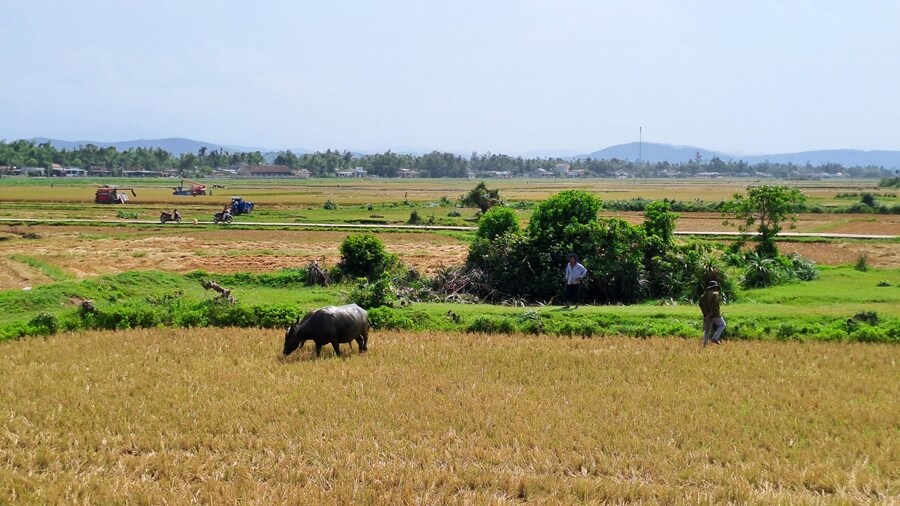
The image of a shepherd sitting on the back of a buffalo, playing a flute in the fields, creates a quiet and gentle scene. Similar images appear in paintings and poetry, shaping how Vietnamese people remember working life.
Through this process, labor is transformed into a cultural element with expressive and reflective qualities. The buffalo, beyond its role in production, becomes a symbol of a lifestyle defined by simplicity, stability, and its own rhythm.
6. Experiencing the Image of the Buffalo on Your Journey to Explore Vietnam
What Vietnamese people see in the image of the buffalo does not exist only in memory. It remains present and tangible in the fields today.
In northern mountainous regions such as Sapa or Ha Giang, during the rainy season, travelers can encounter farmers leading buffaloes into the fields to begin plowing for a new rice crop. In some places, you can even try plowing yourself, walking behind a buffalo and experiencing the rhythm of labor that Vietnamese people have known for generations.
Along the roads from Hue to Hoi An, or in the provinces of the Mekong Delta, the image of the buffalo continues to appear naturally. You may see them standing at the edge of fields, wading through water, or moving slowly in harmony with the rhythm of rural life.
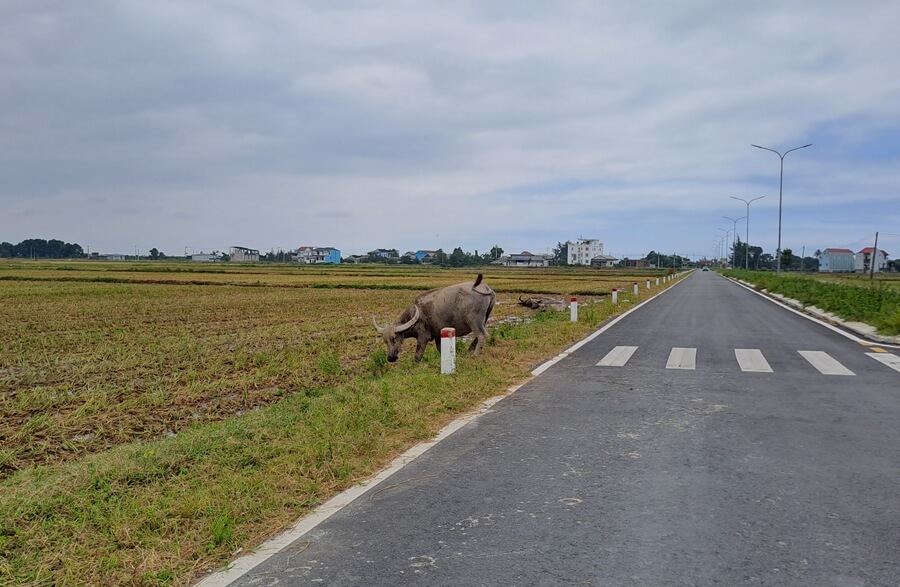
In Hoi An, the experience becomes even more immersive. You can ride a buffalo or sit in a buffalo cart, traveling along small paths through fields, coconut groves, and peaceful villages.
However, to witness these scenes, you need to go beyond the main tourist areas. These locations are not typically near hotels and are not easily accessible by public transportation.
That is why many travelers choose chauffeur-driven car rental services in Vietnam, not only for transportation but also for the flexibility to stop, observe, and experience the presence of the buffalo, an essential element of both the agricultural and spiritual life of the Vietnamese people.
7. Conclusion
The Year of the Buffalo is not just a point in the cycle of time. It is how Vietnamese people define a period of life. In that period, labor is no longer a chore but the foundation of survival. Perseverance is not optional but essential.
The image of the buffalo originates in the fields, enters everyday language, and remains in thought. It becomes a system of values: work, accumulate, move slowly but surely, and live in harmony with what one has.
Therefore, when speaking of the Year of the Buffalo, Vietnamese people are not just referring to a zodiac animal. They are expressing a philosophy of life, a way of starting anew without rushing, yet strong enough to endure and progress over time.
When speaking of the Year of the Buffalo, they are not just referring to time, but to a way of life.