Many transport suppliers in Vietnam can tell you they have good vehicles, professional drivers, and 24/7 support. The harder questions are what actually happens when a flight is delayed, a vehicle breaks down, a guest changes the itinerary, or a last-minute booking comes in.
The best way to evaluate a transport partner is how they operate, not what they promise.
In this guide, we’ll look at the key questions to ask before choosing a transport partner in Vietnam.
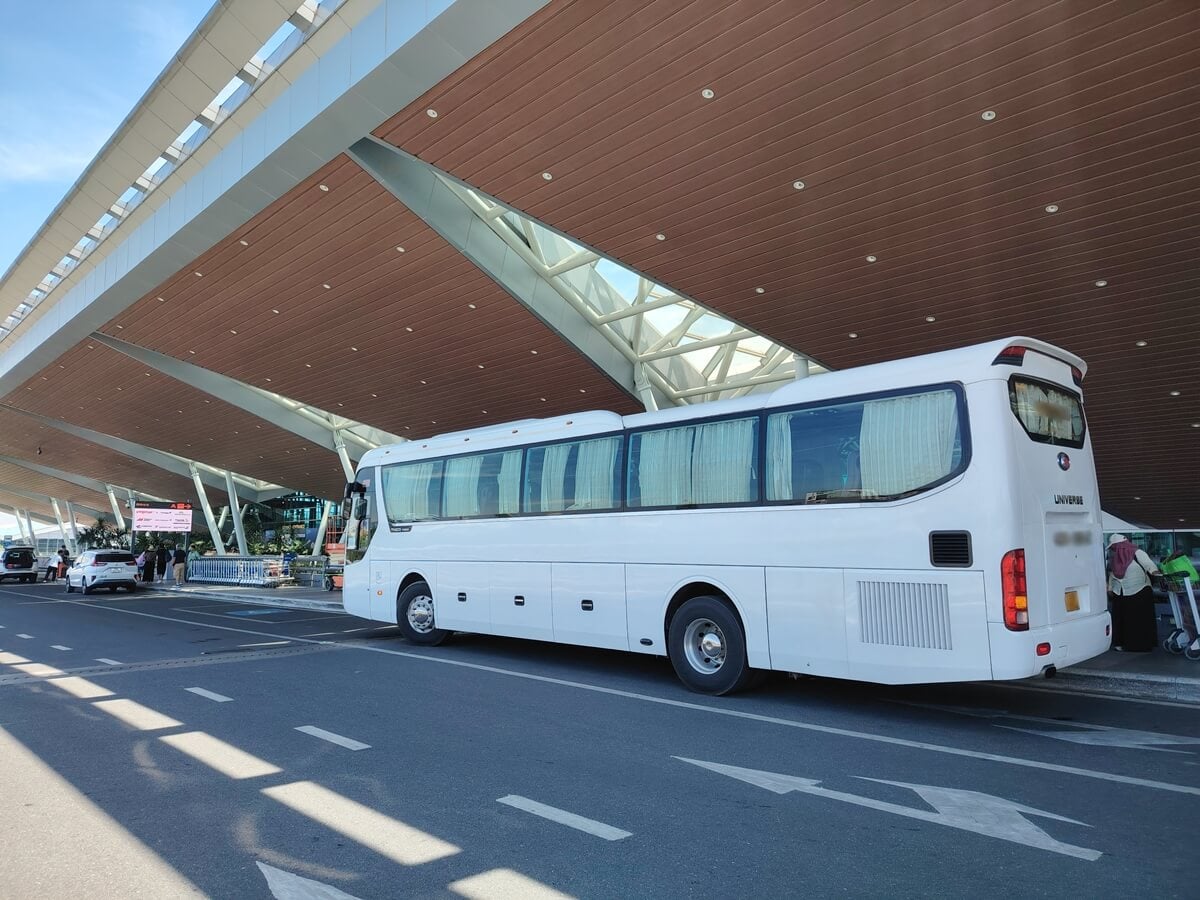
1. What vehicles do you operate directly?
Depending on your company’s profile, whether you serve tour groups or FIT (Free Independent Traveler) clients, you should look for a transport provider with a fleet that meets your specific needs, such as 4-, 7-, 16-, 29-, 35-, or 45-seat vehicles.
If your clients primarily request luxury vehicles in Vietnam, this question also helps you quickly identify which specific vehicle models the provider in Vietnam currently operates.
2. Do you use subcontracted vehicles?
Be cautious of providers who claim they never use vehicles from other partners. This does not necessarily mean they are superior.
In reality, it is very difficult for a single transport provider in Vietnam to directly own and operate the full range of vehicles, from small cars to large buses, across multiple provinces and cities. Some companies specialize in 4- to 16-seat vehicles for FITs and small groups, while others focus on 16- to 45-seat buses for large tour groups. Each type of operation requires a different approach to investment, coordination, and management. Consequently, not every provider has the capacity to meet every possible need.
The Vietnamese tourism industry is also characterized by distinct seasonality. Demand for vehicles can fluctuate significantly throughout the year. Therefore, many providers maintain a core fleet for regular operations while partnering with other transport companies when they need additional vehicles or specific types of vehicles they do not operate directly.
Thus, when evaluating a provider, the use of subcontracted vehicles is not, in itself, a definitive indicator of quality or operational capability. What matters more is whether they have a network of reliable partners and the ability to coordinate those resources when needed.
3. How do you handle vehicle breakdowns?
When asking this question, you should evaluate how the provider handles the situation and whether their approach aligns with your service requirements.
Typically, Vietnamdrive focuses on four key factors:
Who arranges the replacement vehicle?
How quickly can another vehicle be dispatched?
Is the replacement vehicle of equivalent quality?
Who pays the additional cost?
Based on our operational experience, we highly value providers who can dispatch a replacement vehicle of equivalent quality within 1 to 1.5 hours, such as in the event of an air-conditioning malfunction, in major cities like Ho Chi Minh City, Hanoi, or Da Nang. In such cases, the provider should also cover all costs associated with replacing the vehicle.
4. What happens if the driver is late?
This question helps you assess the practical operational capabilities of a transport provider in Vietnam.
When working with providers, Vietnamdrive often incorporates real-world operational scenarios into discussions, evaluations, and training. A crucial factor is the ability to maintain communication with the client or agent and provide timely updates when issues arise.
For instance, consider a scenario where a driver is traveling from Ho Chi Minh City to pick up a client in Vung Tau but gets stuck in traffic and is unable to arrive on time. In such cases, we typically prepare two courses of action.
Scenario 1: The client has a flight or an important schedule
If the client needs to depart immediately, a vehicle already available in Vung Tau can be dispatched to transport them. The two drivers can then coordinate to transfer the client at a suitable point along the route, provided conditions allow.
Scenario 2: The client is able to wait
If the client does not have an urgent schedule, the priority is to determine the driver’s estimated arrival time and clearly communicate it to the client. In some cases, Vietnamdrive, or the provider at our suggestion, might offer the client a Vietnamese coffee while they wait. This serves as a gesture of hospitality and demonstrates a proactive approach to managing the client’s experience.
In special cases, such as when a delay significantly affects the committed service, arrangements regarding refunds, compensation, or the cost of alternative transportation must be agreed upon with the provider in advance.
Ultimately, what matters most is not simply whether the driver is late, but how the provider responds when such a situation occurs. Delays are particularly undesirable when serving international tourists.
5. Is there really a 24/7 emergency contact?
Depending on the company’s or provider’s operational model, you should inquire about their 24/7 support line. Do not simply ask whether a supplier offers 24/7 support. Test it.
You should also call this number outside of business hours to verify whether actual 24/7 support is available or whether the claim is merely a marketing tactic. This is particularly important when serving international clients, as many flights arriving at Noi Bai (Hanoi) or Tan Son Nhat (Ho Chi Minh City) land after 10 PM. When assistance is needed at such times, the crucial question is: Who actually answers the phone and assists the client?
For major B2B contracts, it is advisable to test the after-hours support line yourself before committing to a significant volume of bookings.
6. Can they provide VAT invoices?
VAT invoices serve as a means of verifying a supplier’s operational status and legal credentials. You can use the invoicing process as one step in validating the supplier’s legal details, such as the business name, tax code, and billing information, before entering into a partnership.
If your company requires VAT invoices for accounting or client billing purposes, confirm this requirement before establishing the partnership.
Generally, you should provide your complete company details at the time of booking, making a deposit, or submitting payment to ensure that the supplier can issue the invoice accurately and in accordance with proper procedures.
7. What is included in the quotation?
This aspect is particularly important for international travel agencies, as the inquiry goes beyond a simple “How much?”
It is essential to know exactly what the quoted price covers. Clarifying this helps avoid unexpected costs that were not clearly defined during the initial quotation process.
When working with suppliers in cities across Vietnam, Vietnamdrive typically requires its team to verify exactly what is included in each quote with partners, covering items such as:
- Tolls and parking fees
- Airport fees
- Tunnel fees, if applicable
- Driver expenses
- Waiting time
- Overtime charges
- Additional stops
- Night surcharges
- Hotel pickup and drop-off
- Intercity surcharges
This is not an exhaustive list. Costs may vary depending on the specific route, vehicle type, and service format.
Consequently, Vietnamdrive requires most quotes from its network of suppliers to be all-inclusive. This ensures that partners have a clear understanding of the costs from the outset, eliminating the need to deal with unnecessary additional expenses while serving clients.
The goal is not merely to offer a competitive price, but a price that partners can anticipate and trust. Therefore, rather than focusing on price-based competition, we prioritize reliability, accuracy, and transparency in every service we provide.
8. How do you handle itinerary changes?
Most providers we have worked with give rather vague answers, stating that itinerary changes are handled on a case-by-case basis.
Vietnamdrive values local providers with clear policies regarding itinerary changes, such as the distance or duration allowed without an extra charge, the thresholds for additional fees, when overtime charges begin, and how those additional costs are calculated.
Instead of simply saying, “We are flexible,” a good provider should be able to clearly explain how that flexibility applies in practice.
9. Can you support multi-day trips?
Most local providers are quite willing to service multi-day itineraries. This is often an advantageous arrangement for providers, as they can assign the same vehicle and driver to the entire trip rather than coordinating a new vehicle for each day.
Typically, the local transportation companies we know prefer to assign a single vehicle and driver to a trip within a specific region, such as the North, Central, or South.
For itineraries spanning multiple regions or crossing the entire country, the provider will need to evaluate the specific trip to determine whether to assign one or multiple vehicles and drivers, based on the distance, duration, and intensity of travel.
Another point to check regarding pricing policies for multi-day trips is the “overnight fee” covering the driver’s accommodation. Some providers, especially those operating 29- to 45-seat buses, might list “meals and accommodation with the group” in the quote to lower the price, meaning that this specific fee is not included. Therefore, you should clearly confirm whether the driver’s accommodation and related expenses are included in the quoted price.
What about the providers in Vietnamdrive’s network? We always require the driver’s meals and accommodation to be included in the quote, so that agents or clients do not have to calculate or handle these additional costs themselves during the trip.
10. How much advance notice do you need?
This question aims to determine more than just the required lead time for booking. It is also crucial to understand the provider’s capacity to handle ad hoc requests or urgent bookings.
Booking as early as possible gives the provider greater flexibility in arranging vehicles. However, the required lead time depends on factors such as vehicle type, destination, travel season, group size, itinerary, and the provider’s specific capabilities.
For B2B contracts, booking deadlines and pricing policies may be negotiated individually between the Vietnamese provider and the travel agency, depending on the service type and whether the clients are FITs (individual travelers) or large groups.
Of particular importance is the provider’s ability to handle unexpected requests, especially last-minute bookings. For instance, how does the provider respond if an individual traveler needs a vehicle on short notice or a group requires a last-minute vehicle change?
This is where the provider’s operational capacity and partner network become vital. A provider with a strong network can coordinate vehicles from other partners when its own fleet is unavailable.
Therefore, rather than simply asking, “How much advance notice do you need?”, consider asking:
“How do you handle last-minute bookings when your own vehicles are not available?”
11. What is your cancellation policy?
Cancellation policies vary from one supplier to another, so it is important to check and agree on the terms clearly before making a booking.
At a minimum, clarify:
- Cancellation deadline: How long before the service can it be cancelled without a charge?
- Partial cancellation: What happens if only part of a booking is cancelled?
- Deposit: Is the deposit refundable after cancellation, and under what conditions?
- No-show: What happens if the customer does not show up?
- Flight cancellation or delay: How is the booking handled if the customer’s flight is cancelled or significantly delayed?
- Supplier cancellation: What happens if the supplier has to cancel the service?
- Force majeure: What happens in situations such as floods, storms, or other circumstances beyond either party’s control?
For B2B cooperation between an international travel company and a local supplier in Vietnam, these terms are normally set out in the agreement or supplier contract.
If you cannot find them clearly stated, ask before you start sending bookings. A clear understanding of cancellation terms from the beginning helps both sides avoid misunderstandings and handle unexpected situations more smoothly.
12. Can you provide a backup vehicle?
Most local providers aim to maximize vehicle utilization. Consequently, they typically do not keep a dedicated vehicle sitting idle, reserved solely for use in the event of a breakdown or operational failure involving another vehicle.
However, depending on their operational capacity, dispatch capabilities, and partner networks, they can often mobilize a replacement vehicle when necessary.
Therefore, when evaluating the “backup vehicle” criterion, you do not necessarily need to ask whether the provider has a spare vehicle on standby. It is more important to assess their ability to quickly locate and dispatch a suitable vehicle should the primary vehicle become unavailable.
A backup vehicle does not necessarily mean a spare vehicle sitting in a parking lot. It can also refer to a reliable backup network.
This criterion also serves as an indicator of a provider’s flexibility, operational competence, and the quality of its local transportation network.
If you’re looking for a local transport partner in Vietnam, Vietnamdrive can help coordinate reliable suppliers for your bookings.
Looking for a transport partner in Vietnam? Talk to Vietnamdrive.