
These options are commonly used by international travelers when exploring urban areas in Vietnam.
Car: This is the preferred mode of transportation for most international tourists when visiting urban attractions. This vehicle is suitable for individuals, couples, or small families. Renting a car with a driver in Vietnam is easy, convenient, and effective for exploring Hanoi, Ho Chi Minh City, Da Nang, or Hue.
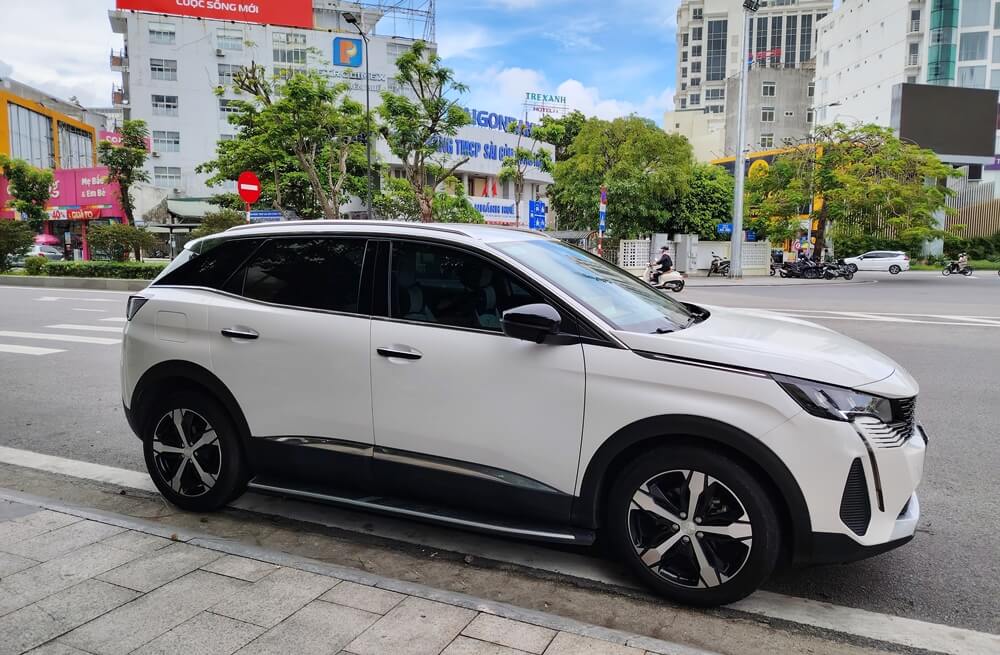
Taxi: Taxis operate actively in most cities in Vietnam, from Hanoi, Da Nang, and Ho Chi Minh City to Phu Quoc Island. They are a suitable choice for short distances or airport transfers.
Subway: This is a new form of transportation for both locals and tourists exploring Hanoi and Ho Chi Minh City. Similar to metro systems in other countries, the subway allows for quick travel between stations, though it may not align with the tourist attractions visitors want to reach.
City Bus: These bus networks operate widely in major cities, such as Ho Chi Minh City, Hanoi, Da Nang, and Hue. However, buses mainly serve local residents and are only suitable for a small number of international tourists who want to experience local daily life. They are not ideal for travelers seeking convenience or those with limited time.
Ride-hailing apps: Services such as Grab and Be are developing rapidly, becoming an alternative to traditional taxis. Grab, in particular, holds a large market share and is quick to use for short point-to-point trips. However, if travelers plan to visit multiple places in one day, they should consider using a private car for more flexibility.
These vehicles let travelers experience the city in a more enjoyable way, not just as a means of getting from one place to another.
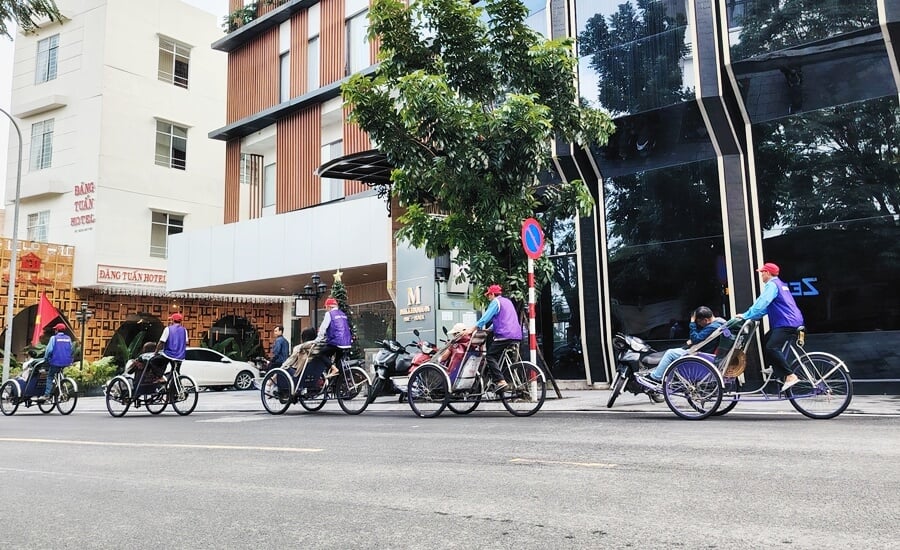
Cyclo: This was once used to transport goods and local residents. However, as motorbikes became more common, cyclos shifted to serving tourists to remain viable. Nowadays, travelers can experience spacious cyclos in Hanoi; in Ho Chi Minh City, where cyclos often appear in central areas such as around Bui Vien and Pham Ngu Lao Streets; and in Hue, Da Nang, and Hoi An, where the vehicles are more compact.
Bicycle: Some cities are well-suited for exploring by bicycle, such as Hue, a green city with tree-lined routes along the Perfume River; Hoi An, where visitors can cycle through the ancient town and nearby rice fields; and Nha Trang, with the coastal Tran Phu route. However, we do not recommend cycling in Da Lat due to its steep terrain, which makes climbing hills difficult and tiring.
Motorbikes: Motorbikes are widely used throughout Vietnam. Tourists may choose this option to experience local transportation. However, Vietnamdrive does not encourage international travelers to drive motorbikes themselves. Instead, we recommend using professional motorbike tour services such as Back of Bike or XO Tours in Saigon; Back of Roads in Hue; or Hue Adventures that specialize in the Hue–Hoi An route. These companies have experienced drivers who are trained to serve international guests, ensuring a comfortable and enjoyable experience.
Boats: Tourists can choose from different types of boats depending on their destination: dragon boats on the Perfume River in Hue; merchant boats (now serving tourism) in Hoi An; night cruises on the Han River and Saigon River; boats on the Can Tho River; the Saigon–Cu Chi boat route; or overnight cruises on Ha Long Bay and Lan Ha Bay (including many luxury options), making them ideal for discovering nature in Vietnam.
Airplane: Flights are the preferred transport and account for a large proportion of journeys over 300 km. According to a report from the Civil Aviation Authority of Vietnam, domestic flights average an 80% seat occupancy rate (source in Vietnamese), which shows that airplanes are commonly used for popular routes, such as Hanoi to Ho Chi Minh City, especially when travelers have short trips of less than seven days; as well as other routes like Hanoi – Hue, Hanoi – Da Nang, Da Nang – Ho Chi Minh City, and many others. Besides, Vietnam’s dense flight network also connects to several islands, such as Hanoi – Con Dao and Ho Chi Minh City – Phu Quoc.
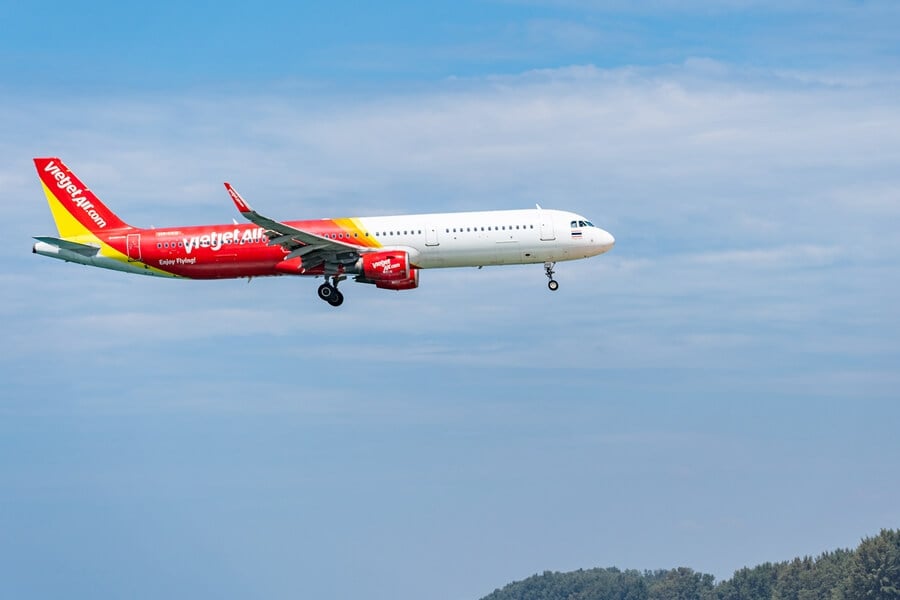
If you plan to fly, please check domestic airlines in Vietnam to choose the one that suits you.
Train: Trains connect provinces and cities along Vietnam’s north–south axis. The state-operated Thong Nhat trains (Reunification Trains) run frequently between Hanoi and Ho Chi Minh City. In addition, some trains have upgraded interiors and enhanced services to provide better travel experiences, such as the Hue – Hoi An heritage trains with codes HĐ1/2 and HĐ3/4 (managed by Vietnam Railway Corporation) or the Hanoi – Ho Chi Minh City luxury service train operated by PYS Travel.
After arriving by plane or train, many travelers rely on private transfers in Vietnam to continue their journey comfortably.
Inter-provincial buses: This type of transport used to thrive because it served the needs of low- and middle-income travelers. However, since the expansion of low-cost airlines such as Vietjet, many people now choose to fly for distances over 300 km. Inter-provincial buses remain common in areas without airports or available flights, such as routes from Mien Dong Bus Station (HCMC) to Central Vietnam, Mien Tay Bus Station to Mekong Delta provinces, or Giap Bat Bus Station (Hanoi) to nearby provinces. Although these buses primarily serve local residents and often do not meet the expectations of international tourists, we include them here for travelers who are curious or for younger tourists who want to experience real local daily life.
For your group to travel here, please check private coach rental in Vietnam to get better service stardards.
Sleeper bus: This is a popular choice for long-distance routes such as Hanoi – Sapa, Hanoi – Hue, Hue – Hoi An, Hoi An – Nha Trang, or Nha Trang – Ho Chi Minh City. The seats are designed like beds, allowing passengers to rest or enjoy the scenery along the way. Because these buses are shared with many other guests, most of these guests tend to be budget travelers or backpackers. Vietnamdrive has not recorded 4 or 5-star travelers requesting this type of transport for long trips, except for the Hanoi – Sapa route.
Hydrofoil: This means of inter-provincial or inter-city transportation has limited use, as it cannot compete with other types of transport. However, hydrofoils can still be found on routes such as Ho Chi Minh City (Bach Dang Wharf) to Vung Tau or from Kien Giang to Phu Quoc.
Motorbikes: Motorbikes remain the dominant means of transport in rural areas due to their convenience and maneuverability, allowing them to navigate narrow village roads with ease. People can travel on many types of land surfaces, including concrete roads, dirt paths, muddy roads, and even sandy stretches along the coast. With many small alleys cutting across main roads and a more “free and easy” driving style compared to cities, motorbikes can appear unexpectedly from any direction. Therefore, even though village roads are quiet and have little traffic, you still need to be extremely cautious when traveling.
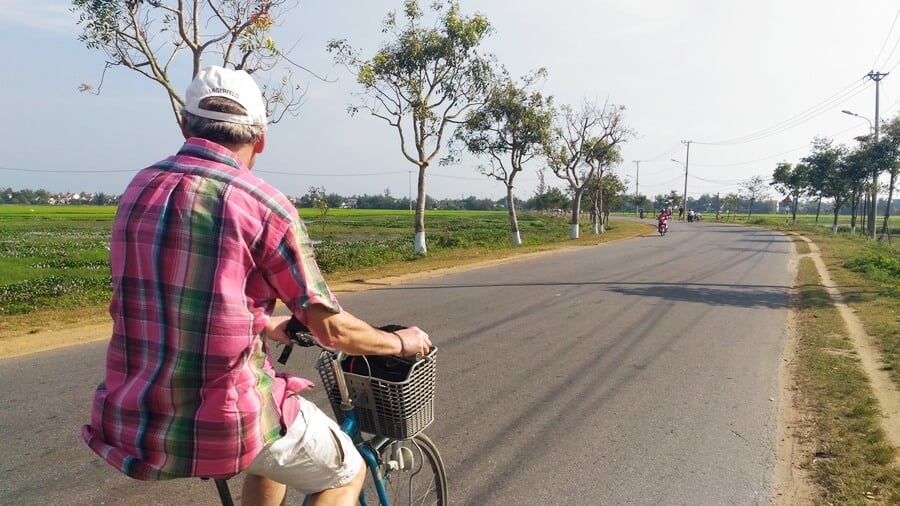
Bicycles: Bicycles are still widely used, especially by students, as many rural areas lack a school bus system. This vehicle is also a popular choice among international travelers who want to slow down and enjoy the peaceful countryside: Cycling through rice fields in the Mekong Delta, riding leisurely along small village roads in Ben Tre under rows of lush coconut trees, or exploring Moc Chau with its green fields and small rolling hills as background.
Boats: In the Mekong Delta, with its dense network of rivers, boats have become a familiar means of transport for local residents. This method is also an exciting experience many tourists want to try. However, Vietnamdrive only recommends that international travelers experience boats in Can Tho or Ben Tre, where local companies meet the necessary management and service standards for tourists.
Below are Vietnamdrive’s predictions based on observations of transportation network development, the emergence of new modes of transport, and evolving consumer demand.
Expanding the airport system:
Many airport projects are being planned in provinces and cities such as Ninh Binh, Sa Pa, and Long Thanh (source: VnExpress in Vietnamese). In particular, Long Thanh Airport is expected to become a major transit hub for both Vietnam and international routes, helping to further promote air travel among international visitors and Vietnamese travelers alike.
Electric vehicle trend:
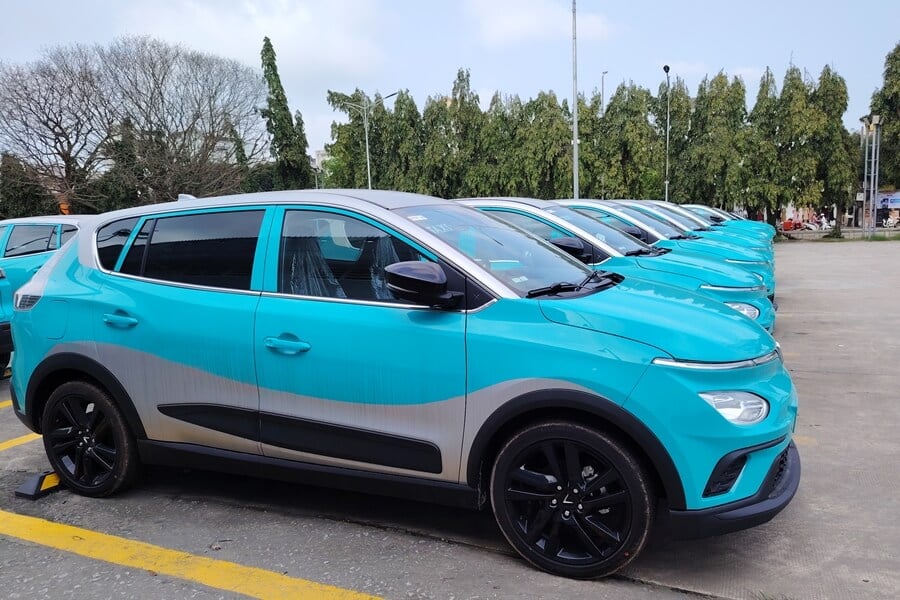
The rapid development of electric cars and motorbikes from VinFast is contributing significantly to the rise of green tourism. However, gasoline and diesel vehicles will still dominate through 2025 and 2026. Meanwhile, taxi services and ride-hailing platforms such as Grab Bike are transitioning quickly to electric vehicles. It is predicted that, in the future, clean-energy and electric-powered vehicles will become increasingly popular, especially in urban areas, supporting environmental protection and sustainable tourism.
Encouraging the use of bicycles:
Bicycles are gradually returning in Vietnam as some cities begin developing dedicated bike lanes. Notably, in Hue, there are green-marked lanes for pedestrians and cyclists, as well as a special cycling path along the Perfume River.
Increasing demand for train experiences:
Recently, Vietnamdrive has received many requests for pick-up services at Da Nang and Hoi An train stations, and drop-off services at Ninh Binh station after visits to Tam Coc. These requests appear to be increasing, suggesting that more travelers are becoming interested in scenic train journeys, especially the Hue to Da Nang route, which passes through mountain passes, coastlines, fields, and villages.
Shift from small to large vehicles:
Some travel companies are promoting large group tours to help reduce costs for travelers. A Vietnamdrive team member once recorded a group of more than 30 European tourists at an airport in Vietnam traveling with one bus and one tour guide.
At the same time, Vietnamdrive has received many requests for buses and bus transport partners. Thus, our team has prepared a guide on how to choose the right transport partner in Vietnam for travel companies arranging group transportation. From this, we assess that large-group travel is on the rise, with a shift from 4-, 7-, and 16-seat vehicles to 29- or 45-seat buses in 2025, a trend likely to continue into 2026.