Many travelers are curious about toilets in Vietnam before their first trip. In this country, you may encounter Western toilets, Asian squat toilets, or bathrooms with water jet sprays instead of toilet paper.
These differences reflect Vietnam’s diverse living conditions, from modern cities to rural areas where facilities may be more basic.
Let’s check the details!
1. Types of toilets in Vietnam
From “natural toilets” to modern automatic toilets, each type brings its own experience.
1.1. Western toilets in Vietnam
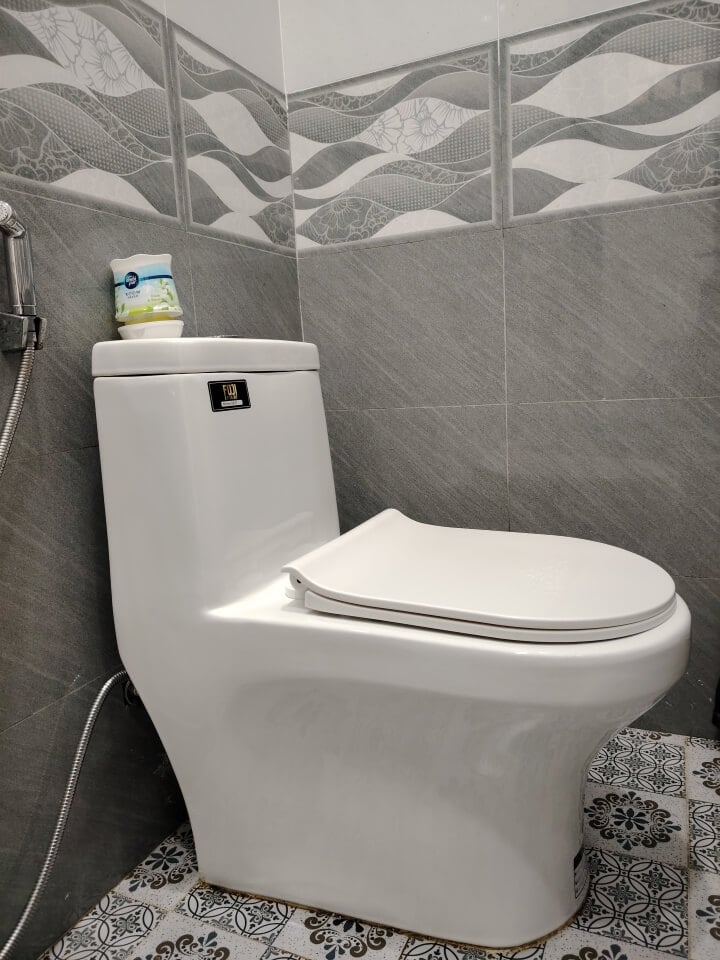
High-seat toilets are gaining popularity in major cities, developed tourist destinations, and even some rural areas, reflecting the country’s ongoing modernization.
That means modern life has gradually entered every alley and village road, changing the way of life and building toilets.
Therefore, finding a European-style toilet during your trip to Hanoi, Sapa, Hue, Da Nang, or Ho Chi Minh City is not difficult.
1.2. Asian squat toilets in Vietnam
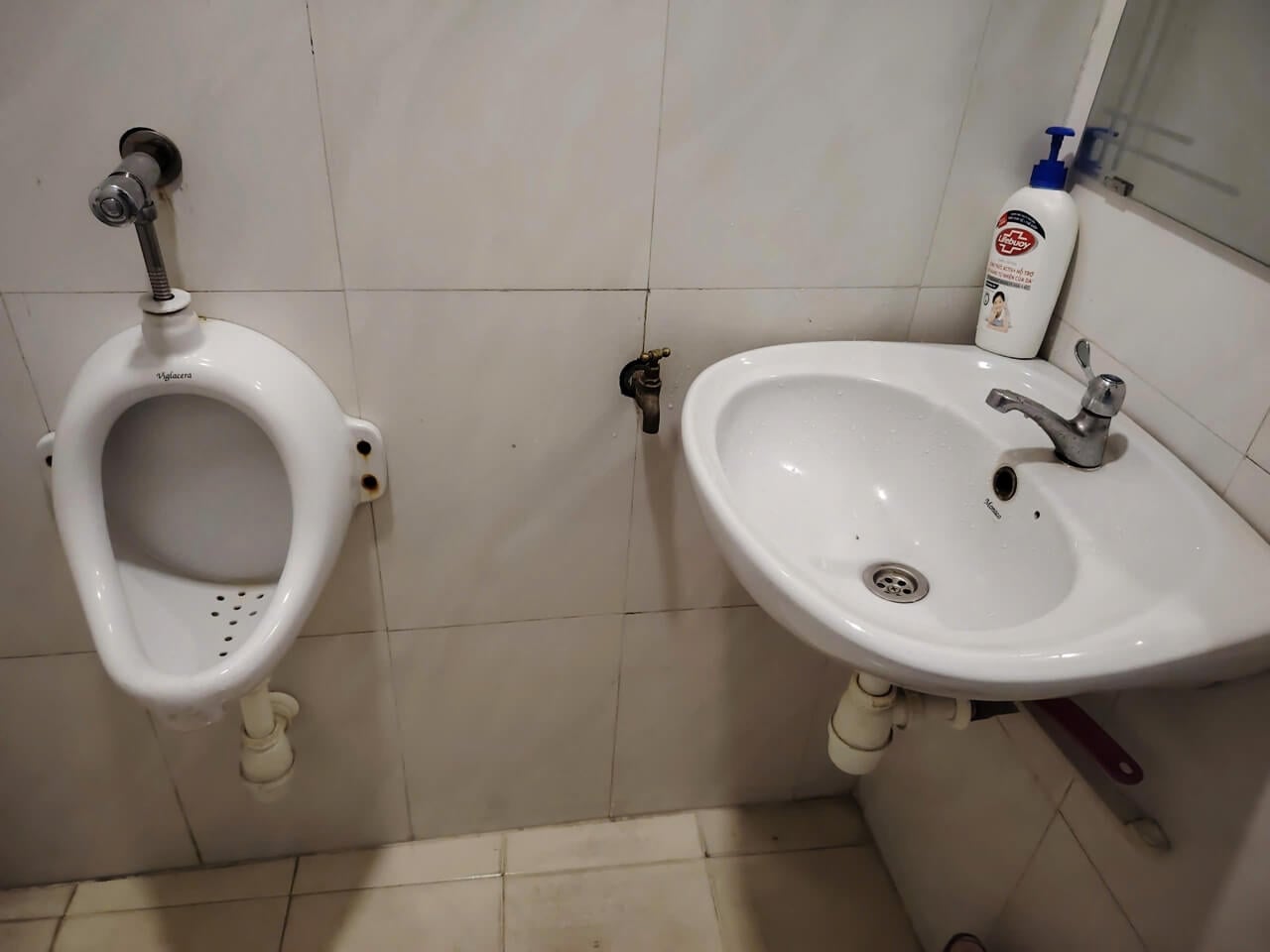
This type of toilets still exists in some rural areas, especially public toilets in small towns in Vietnam, where international tourism has not yet developed.
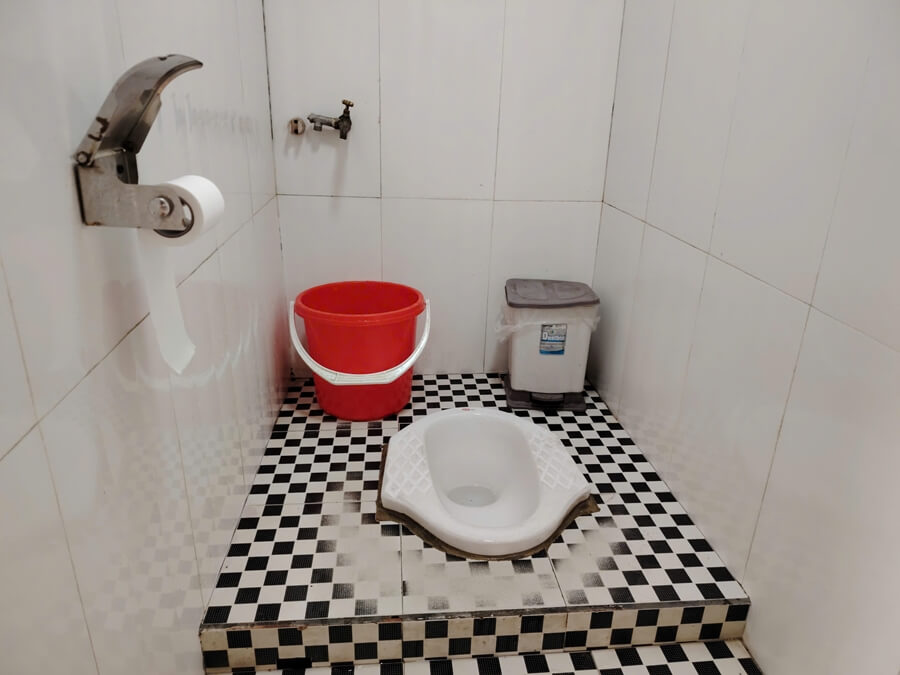
While Asian squat toilets may seem unfamiliar to many visitors from Western countries, they are considered relatively clean for public places. The design helps users avoid direct contact between the toilet seat and their body, ensuring a hygienic experience.
>> Learn more about Asian squats and their cultural significance.
1.3. Automatic toilets
Regarding automatic toilets, we want to mention modern ones, with high standards to serve international and domestic tourists. They are equipped with automatic devices such as automatic flushing, automatic light sensors to turn on and off the lights, and clean hygiene.
This type of toilet is often present in 4 or 5-star hotels in Vietnam for high-end tourists.
In addition to expensive hotels, we were surprised by the toilet system of AEON supermarket. The toilets here have excellent, clean, modern equipment. Their aisles are spacious, the sinks are well-maintained, and the deodorizers are good.
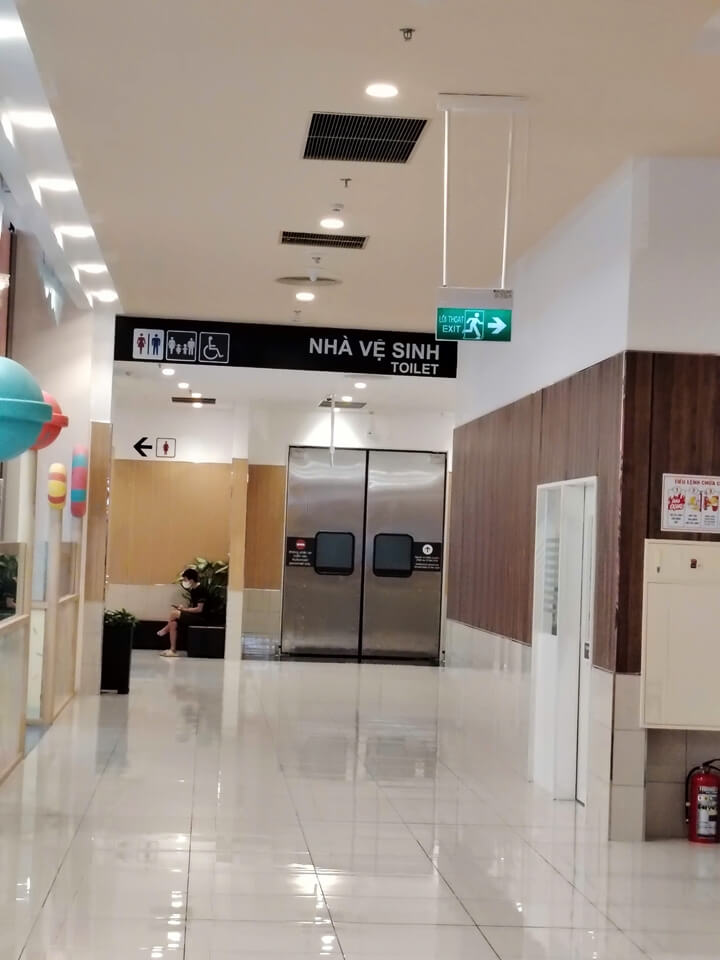
1.4. Toilets on the water
In some rural areas of the Mekong Delta, where rivers and canals cover a large area, you can see unique toilets built on the water. They are often surrounded by water coconut branches, with a few simple wooden bars for standing and sitting, hanging right on the surface of the canal.
Although this type of toilet used to be an indispensable part of daily life, today, they are gradually being replaced by more modern constructions to protect the environment and meet the increasing needs of the people.
1.5. “Natural toilets”
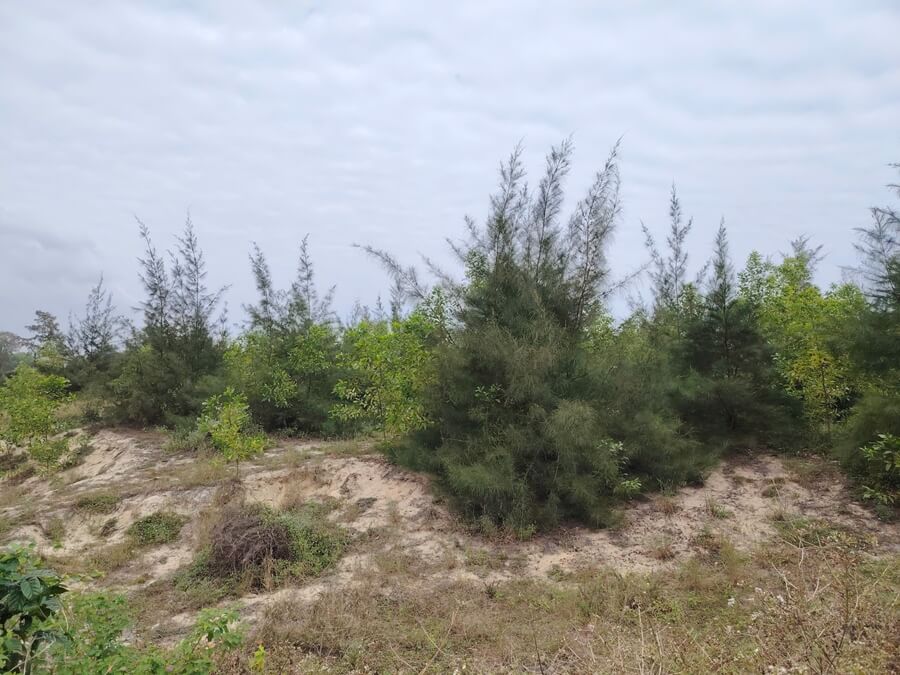
In some large rural areas or mountainous areas, houses are still sparse, places lack amenities, and “natural toilets” are still used.
“Natural toilets” is the name for outdoor toilets when no structures are built or set up. Some people dig small holes in the ground and fill them up after use. In very remote areas where facilities are limited, people may still rely on simple outdoor arrangements.
However, this situation rarely happens if you join the package tour programs. Almost all famous travel companies in Vietnam have carefully planned reasonable routes and well-organized stops where the toilets are fully equipped.
2. Practical Tips for Using Toilets in Vietnam
2.1. When traveling to rural Vietnam, be prepared for unexpected toilet conditions to avoid any confusion or stress.
2.2. Always carry toilet paper with you. Many Vietnamese toilets, especially free public ones, are not equipped with toilet paper. For more details, see our guide on toilet paper in Vietnam.
2.3. Prepare some change to pay for using public toilets. The price is about 2,000 VND to 5,000 VND, equivalent to 0.08 USD to 0.2 USD.
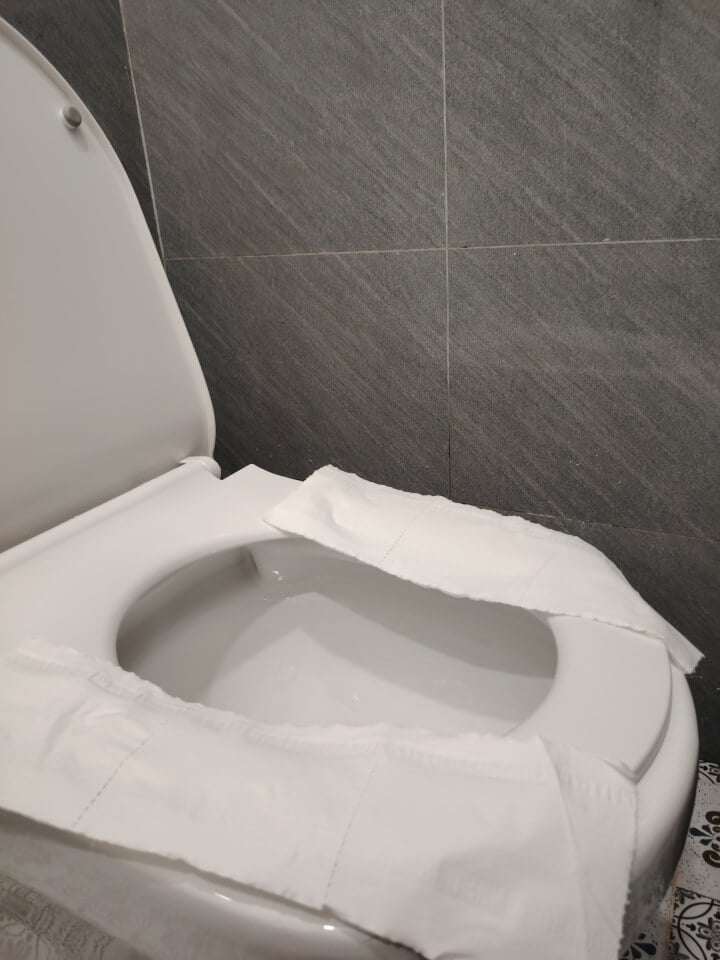
2.4. It is better to use paid toilets than free public because paid toilets have cleaners to avoid bad smells and dirt. Only use public restrooms in some really necessary cases.
Please note that public toilets in Vietnam include both Western-style and squat toilets, with more modern facilities commonly found in major tourist cities. Some older public toilets may not always have the same level of cleanliness as those in hotels or shopping malls.
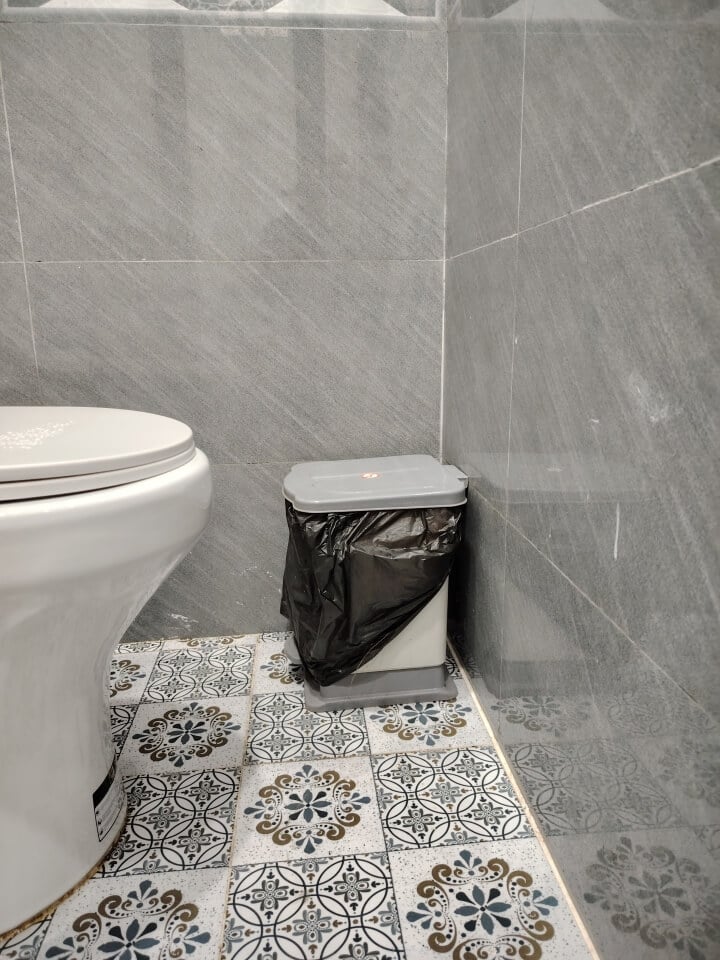
2.5. The toilet usually has a small trash bin where you should throw toilet paper or other personal items to avoid clogging. If you do not see a trash bin, throwing soft toilet paper into the toilet is acceptable. At the same time, bring a small plastic bag with you to throw away hard objects when unexpected.
3. Common Questions About Toilets in Vietnam
In this section, we share experiences revolving around using the toilet and answer frequently asked questions about it.
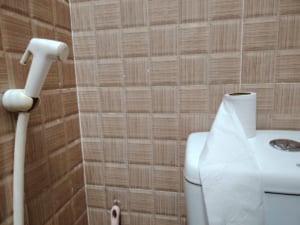
3.1. Why do toilets in vietnam have jet sprays?
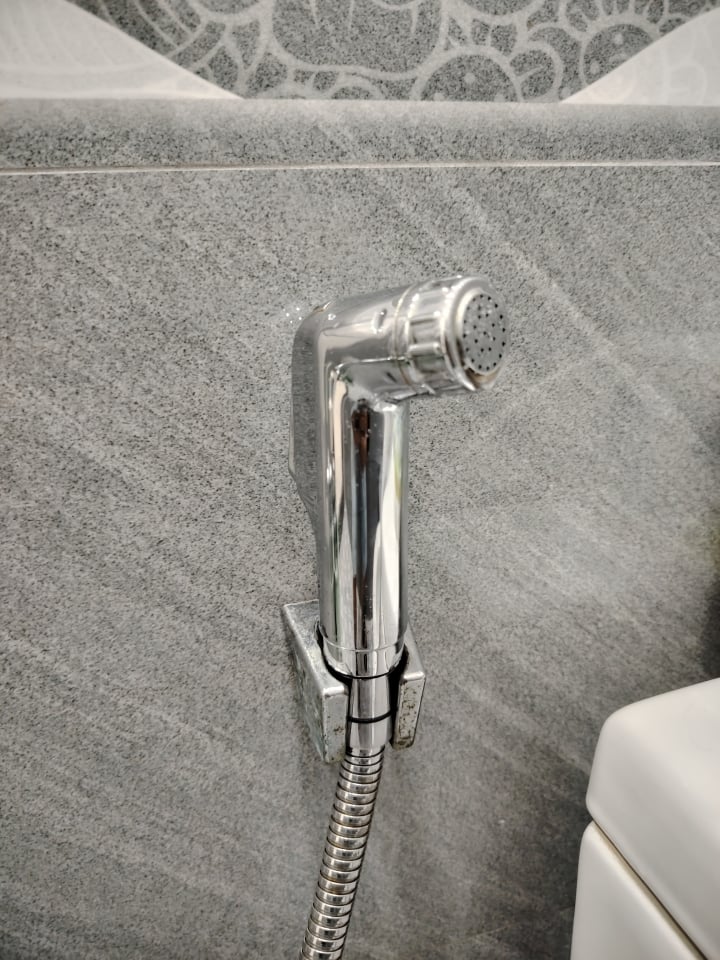
In many Vietnamese toilets, you’ll find a jet spray, also called a bidet spray or bum gun. This small water sprayer is used for cleaning after using the toilet, instead of relying only on toilet paper.
Understanding this practice is useful for international visitors because it is very common in many parts of Southeast Asia.
Use the spray carefully because the water pressure can be quite strong. It is best to test the pressure first to avoid splashing water or spraying too strongly on sensitive areas.
3.2. Is toilet paper important in Vietnam?
Toilet paper has become a popular product in Vietnam’s modern life. It is often essential to form a daily habit.
However, as mentioned above, some toilets are equipped with water sprayers. Hence, toilet paper is often not provided because the water sprayer replaces it. Bringing personal toilet paper is always necessary if you are unfamiliar with using this faucet.
3.3. Are the toilets for men and women separate?
In a few cases where the space is small, such as in restaurants or cafes, the toilets are not separated for men or women.
Most tourist attractions, rest stops, and large hotels separate the toilets for men and women.
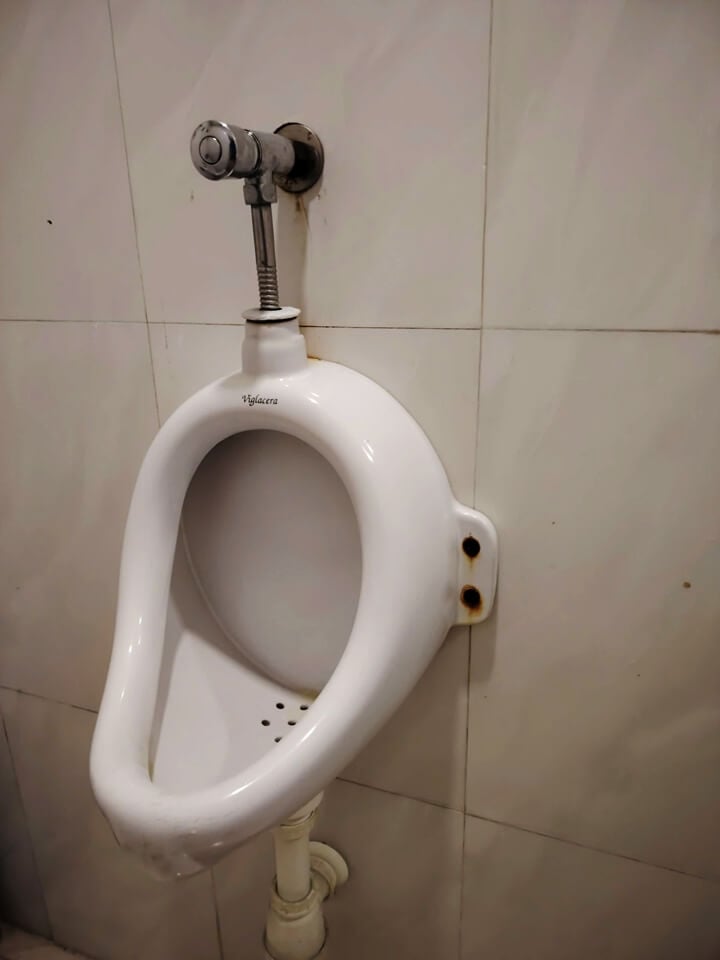
The toilets for men will be marked with the word “Nam,” and the toilets for women will be marked with the phrase “Nữ.” Note that many toilets do not have words; they only print pictures of people representing the genders of men or women.
3.4. Where can travelers find toilets in Vietnam?
Travelers can usually find toilets in shopping malls, restaurants, large coffee shops, gas stations, tourist stops, and hotels.
Many cafes in Vietnam allow customers to use the toilet after ordering a drink, which is a common and polite practice.
3.5. What should I do if I need a toilet while walking in a city?
Most cafes in Vietnam have toilets. You go into this place to buy a drink, usually only costing 20,000 VND or more, and ask them to use the toilet. This is a respectful way of handling things and benefits both parties.
3.6. How can I find a clean toilet in a coffee shop before using it?
The first condition for judging the cleanliness of the toilet is the presence of modern and luxurious coffee shops, such as Trung Nguyen coffee shops or cafes with beautiful decorations.
Another way to judge is that the prices of drinks in the shop are often higher than in other places. To match the price, their toilets cannot be bad.
You cannot expect the toilets on sidewalks and in popular coffee shops to be like those in 3- or 4-star hotels.
3.7. On long-distance trips, are there good toilets to use?
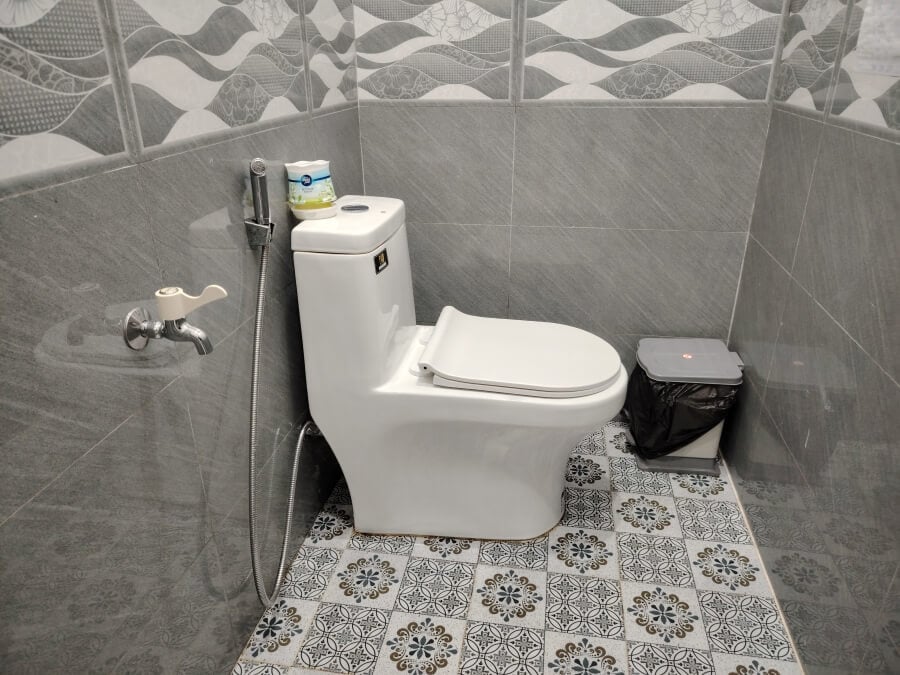
The construction of stops with European-style toilets has been widely developed to serve tourists. Therefore, many stops with suitable toilets on long-distance routes, such as Hanoi to Sapa, Hanoi to Ha Long, Hue to Hoi An, Ho Chi Minh to Tay Ninh, etc., are available.
3.8. How is the quality of toilets on the road and at tourist attractions?
Toilets at stops that provide food and beverage services and sell souvenirs are often better than free toilets at tourist attractions.
However, they are often not the same at hotel toilets. So we encourage you to use the toilet before leaving the hotel.
3.9. How do you say “Toilet” in Vietnamese?
The most common word for toilet in Vietnamese is “nhà vệ sinh,” which literally means “hygiene room.”
An interesting way in the language of tour guides, you will hear them use “Happy House” to refer to the toilet. The explanation for this word is that you will feel happier after using it.
3.10. What Vietnamese phrases can travelers use to ask for the toilet?
When you want to use the toilet, you can say:
- “Làm ơn chỉ giúp tôi nhà vệ sinh?” = Could you please tell me where the toilet is?
- “Tôi có thể sử dụng nhà vệ sinh được không?” = Can I use the toilet?
- “Nhà vệ sinh ở đâu vậy?” = Where is the toilet?
- “Tôi muốn sử dụng nhà vệ sinh.” = I want to use a toilet.
- “Cho tôi đi nhờ nhà vệ sinh được không?” = May I use the bathroom? (When you do not use their service.)
Vietnam’s toilets are as diverse as the country itself, from rudimentary to modern automatic ones. Using different toilets is also part of your journey. Being mentally prepared and knowing what to prepare to make everything go smoothly will make your trip more enjoyable.
If you have any “exciting” experience using toilets in Vietnam, please share it with us!