In Hoi An, communal houses are often overlooked because they do not stand out like temples or pagodas. They are quieter, less decorative, and rarely appear on typical travel itineraries. Yet, each one represents a different layer of local life: some tied to trade communities, others to craft villages, river beliefs, or the union of multiple settlements.
Unlike religious sites that focus on individual worship, communal houses reflect how a community organizes itself. This is why visiting them is less about “seeing a landmark” and more about understanding what kind of village once existed in that area.
When choosing which communal house to visit, it helps to think in terms of context rather than popularity.
- Some are more relevant if you are interested in Hoi An’s trading history.
- Others reveal craft traditions and local occupations.
- A few are connected to river culture and spiritual beliefs tied to daily survival.
Because of these differences, not every communal house offers the same experience. Selecting the right one depends on whether you want historical insight, cultural context, or a deeper look into how local communities functioned beyond the tourist streets.
1. What Is a Communal House in Hoi An? (Quick Guide)
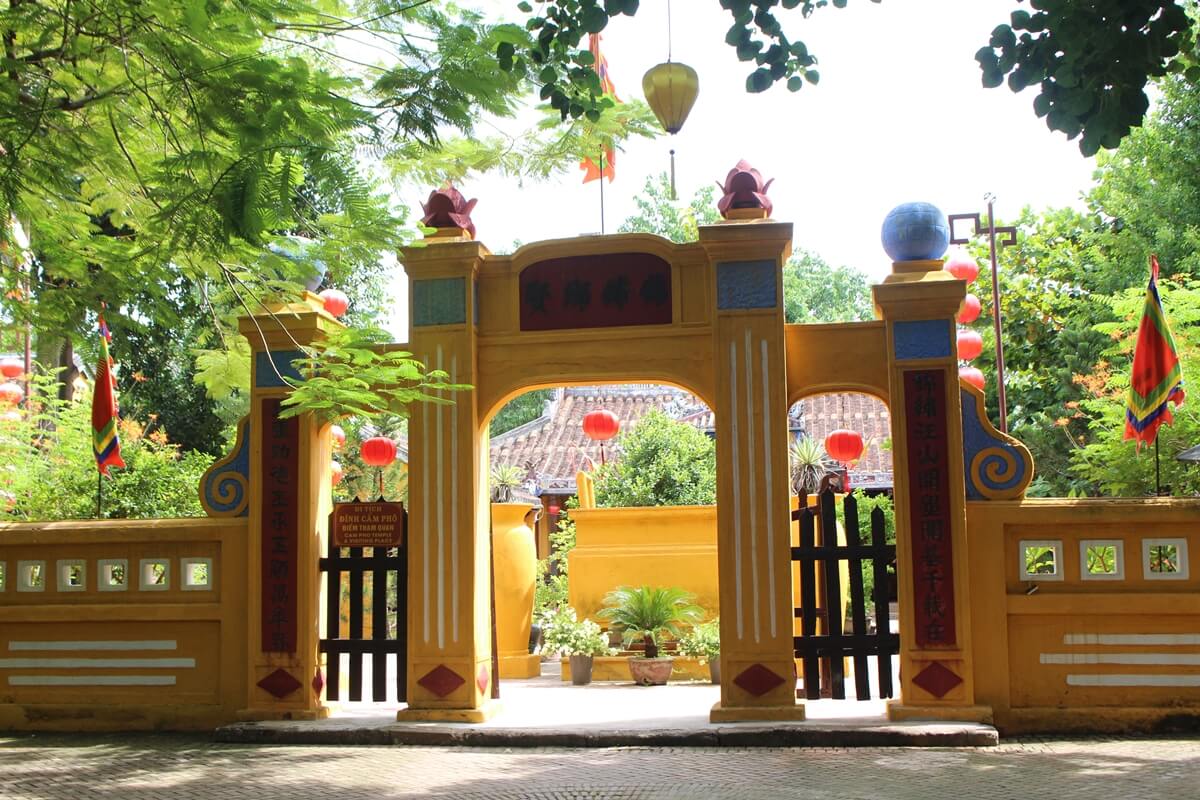
A communal house (đình) in Hoi An is a village-based space where worship and community life meet. It is dedicated to a guardian spirit or local founders, but unlike temples or pagodas, it also functioned as a place where villagers made decisions and gathered for annual festivals.
In contrast, pagodas (chùa) focus on Buddhist practice and personal devotion, while temples (đền/miếu) honor specific deities or historical figures (see temples in Hoi An) . A communal house represents the collective, it belongs to a village, not a religion.
What makes Hoi An different is how these roles are shaped by trade and river life. Some communal houses reflect merchant communities; others are tied to craft villages or water-based beliefs. They feel less ceremonial, more lived-in. Not grand, but grounded, spaces where belief was part of everyday survival, not separate from it.
2. Why Communal Houses Matter in Hoi An
Hoi An was not built as a single city. It grew from clusters of villages, each with its own identity, economy, and internal order, and each anchored by a communal house. These structures quietly record how the town functioned before it became a destination. Trade groups organized here. Craft communities defined their roles here. Agreements were made, not displayed.
Look closely, and differences emerge. One communal house reflects a merchant network shaped by river routes. Another carries the imprint of a craft village that supplied goods to passing traders. They are not interchangeable stops. Each one reveals a specific piece of how Hoi An actually worked.
That is why they matter.
Not as landmarks, but as a way to read the town from the inside, through the people, trades, and communities that shaped it.
3. Notable Communal Houses in Hoi An
3.1. Xuan My Communal House
Location: Block 4, Thanh Ha Ward
This is where Hoi An’s craft identity is stored, not displayed.
Inside, relics, steles, and statues quietly record the work behind the craft, pointing back to the people who made things, not those who traded them. Elephant statues stand near the entrance. The Six Sages temple sits quietly within the complex, reinforcing the link to skilled hands and learned figures.
Come here if you want to understand how craftsmanship shaped the town from within. It feels grounded, almost workshop-like. A contrast to Cam Pho, where movement and exchange defined the space.
3.2. Cam Pho Communal House
Location: 52 Nguyen Thi Minh Khai Street
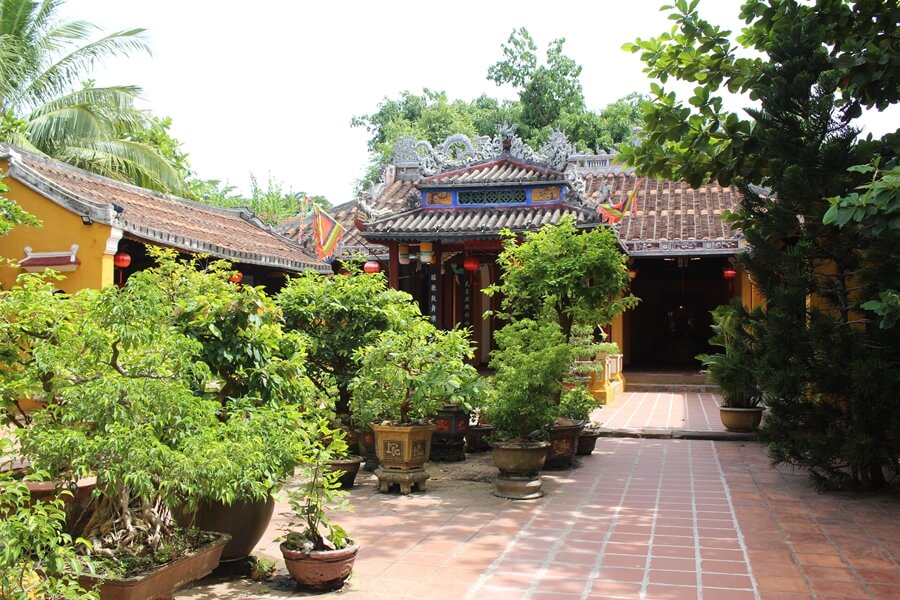
This is where Hoi An once gathered to move goods, not just ideas.
Set in one of the oldest villages, it functioned as a meeting point for traders dealing in agricultural products. The space is open and practical. Built for groups, for coordination, for activity.
Choose this place if you are tracing Hoi An as a trading port in motion. Compared to Xuan My, it shifts the focus entirely. Not production, but circulation. Not makers, but networks. You can still see it in the open, practical layout built for groups rather than isolation.
3.3. Hoi An Communal House (Elephant Communal House)
Location: 3 Le Loi Street
This is where belief follows the river.
Two elephant statues mark the entrance, but inside, the focus turns to water. Deities linked to the sea and waterways dominate. The whale, in particular, is not symbolic. It is remembered as a protector, tied to real events and survival stories.
Visit if you want to see how nature shaped what people believed. Unlike Son Phong, which reflects structure and authority, this place is shaped by uncertainty. Storms, currents, and the need to endure them.
3.4. Son Phong Communal House
Location: 78 Nguyen Duy Hieu Street
This is where separate villages became one recognized entity.
It marks the merging of multiple settlements, later acknowledged by the Nguyen Lords. The inscribed board from 1715, bearing the title “Cuu Nhan Do The” and ten phoenix figures, signals that recognition clearly. Not decorative. Official.
Come here if you are interested in how local communities were organized and elevated. Behind it lies a history of flood-prone land and persistence. In contrast to the Hoi An Communal House, where belief responds to nature, Son Phong reflects order imposed on it.
4. Festivals and Rituals at Communal Houses
Communal houses come alive at specific moments in the lunar calendar. Not daily. Not continuously. Only when the village gathers for something that matters.
At Cam Pho Communal House, the main festival falls on the 15th day of the second lunar month. The ritual begins with processions and formal offerings to the village guardian spirit. Then the atmosphere shifts. Games, bài chòi singing, and shared activities take over. It is structured, but not distant. You see how a trading community once stayed connected beyond transactions.
At Xuan My, the focus turns to craft origins. The ceremonies honor those who built the local handicraft villages from the 17th century onward. The rituals are quieter, more deliberate. Less about performance, more about acknowledgment. A reminder that entire livelihoods started from specific hands.
At the Hoi An Communal House, the ceremonies reflect a different reality. Offerings are made not only to village founders but also to deities linked to rivers and the sea. The rituals carry a sense of caution. They are tied to risk, to journeys that did not always return.
At Son Phong, spring rituals mark the beginning of the year. Processions, incense offerings, and formal rites reinforce a collective structure that once unified multiple villages. It feels organized, almost ceremonial in a different way. Less about memory, more about continuity.
Across all of them, the pattern is clear. Offerings are made. Names are remembered. The community shows up together.
Not for display. For renewal.
5. Can Tourists Visit Communal Houses in Hoi An?
Yes, but access depends on the location.
In Hoi An, some communal houses sit right inside the old town grid, easy to pass by but not always open. Others are tucked in wards like Thanh Ha or Cam Pho, where access feels less touristic and more local. You may find the gate open, or completely quiet. It depends on the day, not a schedule.
So, should you go?
If you are moving through the Old Town and only have time for well-known stops, temples will be more immediate. But if you are willing to step slightly outside that flow, communal houses show a different layer. Not lanterns, not façades. The structure behind them.
What makes them different here?
In Hoi An, communal houses are closely tied to how the town actually functioned. One reflects a trading village. Another is linked to craft production. Another to river-based belief. You are not entering a generic space. Each one connects to a specific part of how this port city operated.
When is it worth visiting?
Go when you want to move beyond the surface of the Old Town. Not to see more places. To understand why those places exist in the first place.
Getting between communal houses often means moving beyond the Old Town. A private car with driver in Hoi An helps you reach places like Thanh Ha or Cam Pho in one trip, without relying on fixed routes or short-distance walking.
6. Conclusion
Hoi An is often seen through its temples, lanterns, and old streets. That is only the surface.
Communal houses sit behind that layer. Quieter. Less visible. But closer to how the town actually worked.
Each one tells a different story. A craft village shaping its identity. A trading community organizing movement. A river culture negotiating risk. A group of villages forming something larger. These are not variations of the same place. They are pieces of a system.
You do not visit communal houses to see more.
You visit to understand what holds everything together.
Once you see that, Hoi An changes.