
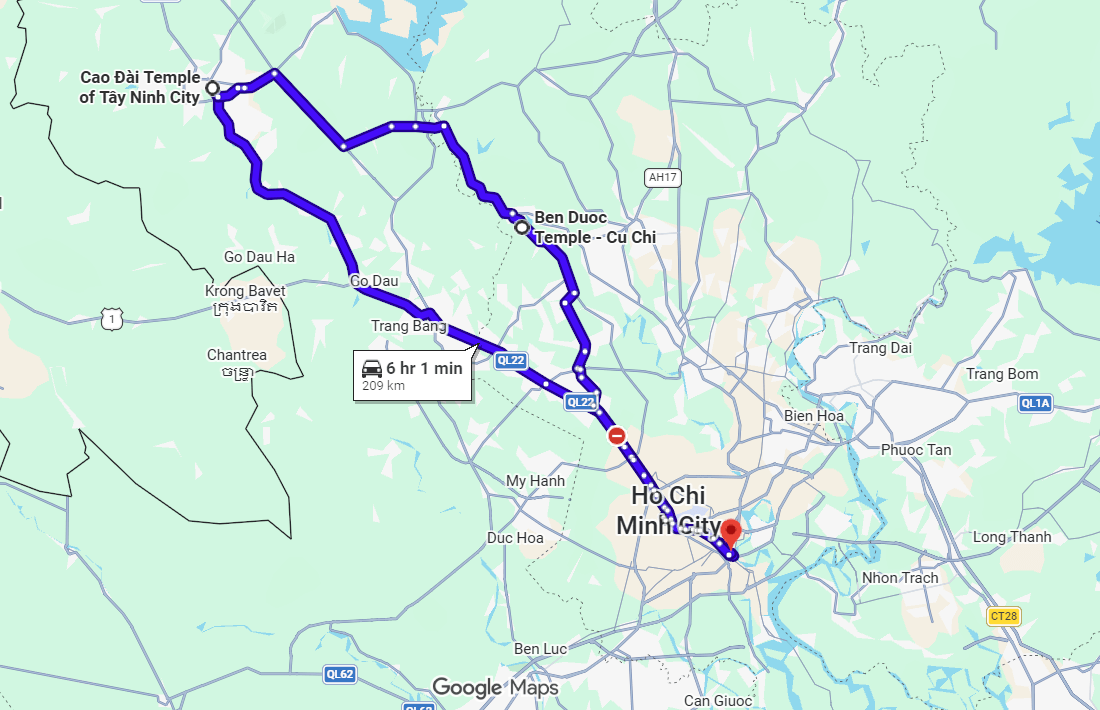
 The displayed Google Maps route is a general reference. Our drivers may adjust certain road sections depending on real-time traffic and local road conditions during the day.
Ho Chi Minh City to Cao Dai & Cu Chi Route Flow
The route first moves northwest toward Tay Ninh for the Cao Dai ceremony before gradually returning through the Cu Chi area and back into Ho Chi Minh City in the evening.
Departure Phase
Leaving Ho Chi Minh City (8:30 AM)
An 8:30 departure usually creates the best balance for this route. Leaving much later increases the risk of arriving too close to the Cao Dai ceremony, especially during slower traffic periods leaving Saigon.
The first section of the drive gradually moves away from the dense urban atmosphere of Ho Chi Minh City toward flatter provincial roads and smaller countryside towns.
Although several sections along the route allow speeds of 60–80 km/h, the overall driving pace is often slower in practice because of frequent traffic lights and transitional urban movement leaving Ho Chi Minh City.
Along DT784, there is an interesting driving section where residential-zone warnings appear repeatedly, sometimes only about 2 kilometers apart, causing the speed limit to change frequently. Instead of maintaining one continuous pace through the countryside, the driving rhythm can feel fast, then slow, then fast again within relatively short sections of the road.
Mid-Route Rest Stop (Around 10:00 AM)
A shorter coffee or restroom stop works naturally during this stage before continuing toward Tay Ninh, helping reduce continuous driving time.
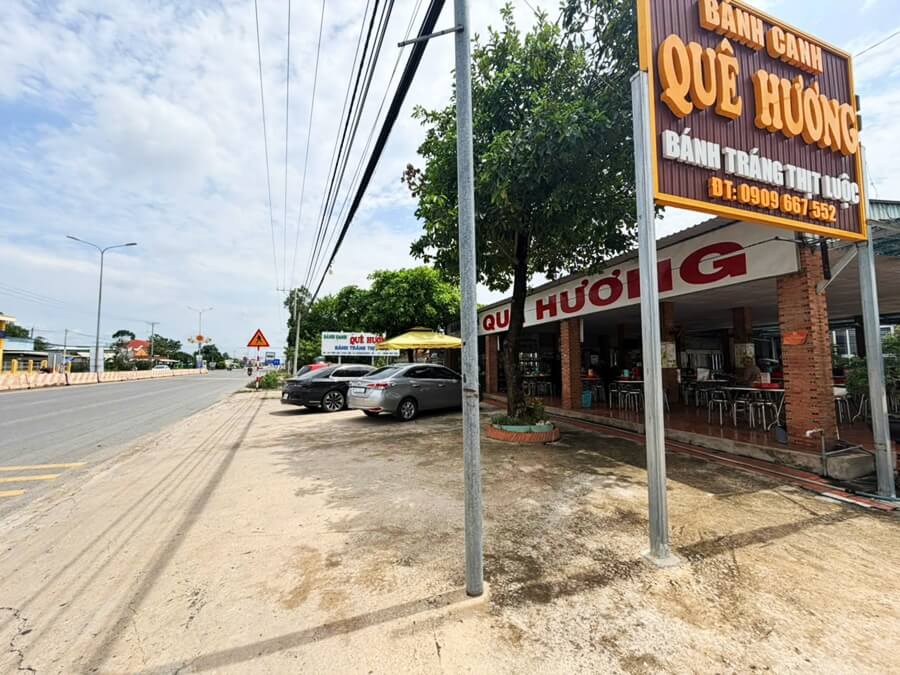
Shortly after leaving QL22 and entering DT782, several local breakfast and rest stops begin appearing along the route. Many groups often choose simpler roadside restaurants such as Bánh Canh Quê Hương because the service is usually fast and the environment is relatively clean.
Driving Toward the Cao Dai Ceremony
Arrival at Cao Dai Temple (12:00 PM)
Arriving slightly before the ceremony allows enough time to settle into the temple atmosphere before visitor movement increases closer to the service time.
Arriving earlier also allows more time to settle into the ceremony atmosphere instead of rushing directly into the ceremony itself.
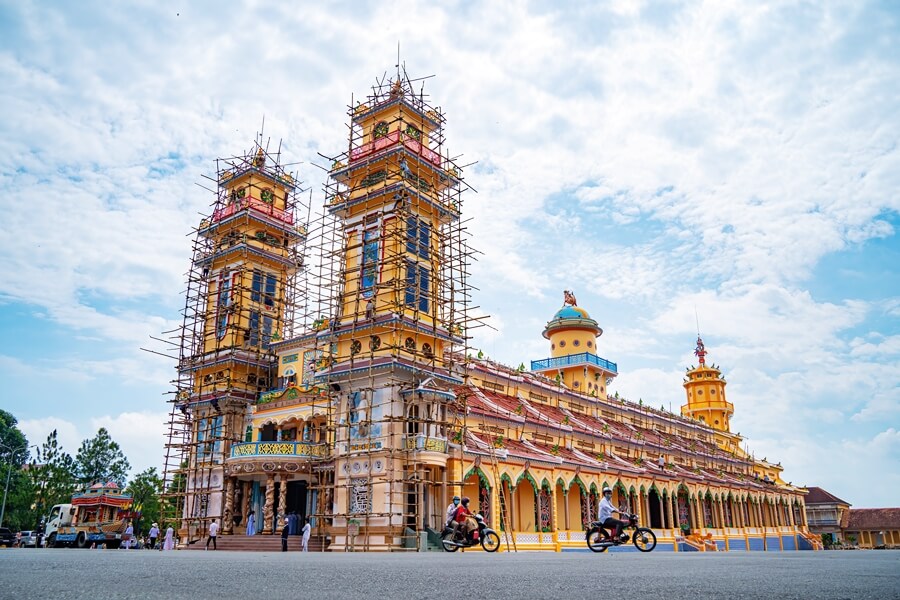
When the car stops along the road near the temple for your visit, please note that the area in front of the main temple still carries regular motorbike and car traffic. So, you should remain aware when crossing between the temple areas and photography sections.
Cao Dai Midday Ceremony (12:30 PM)
The midday ceremony is the central timing point of the journey. Arriving at the Cao Dai Temple slightly earlier is recommended to avoid missing the beginning of the service.
You may enter the temple through designated access areas to observe the ceremony activities inside. Please note that photography is limited in certain sections, so it is best to follow the guidance of temple staff regarding where to stand and where photos are permitted.
Lunch Break (12:50 PM – 1:45 PM)
Lunch fits naturally after the ceremony before continuing toward Cu Chi. Many groups usually prefer a simple and reasonably quick lunch before continuing the afternoon journey.
Transition to the Cu Chi Historical Area
Continue Toward Cu Chi (2:00 PM)
The afternoon drive becomes shorter and more relaxed compared to the earlier morning section toward Tay Ninh. This stage gradually transitions from countryside movement into the Cu Chi historical area.
Vietnamdrive recommends visiting the Bến Dược section of Cu Chi Tunnels for this driving journey. Since Bến Dược is closer to Tay Ninh than Bến Đình, the route flow becomes more efficient and usually allows more time within the Cu Chi historical area before returning to Ho Chi Minh City in the evening.
Compared to Bến Đình, Bến Dược also generally feels quieter and more spacious, with a broader historical setting and less commercial movement around the site.
Cu Chi Historical Area (Around 3:30 PM)

The later afternoon timing generally works better for walking through the outdoor sections around Cu Chi compared to stronger midday heat earlier in the day.
Ending the Road Journey Back in Ho Chi Minh City
Return Journey to Ho Chi Minh City (5:00 PM – 5:30 PM)
Leaving around 5:30 PM, the journey gradually transitions from the quieter historical atmosphere around Cu Chi into the more energetic evening movement approaching Saigon.
Arrival Back in Ho Chi Minh City (6:30 PM – 7:00 PM)
This arrival timing aligns with evening plans in the city. Some travelers prefer returning directly to the hotel, while others continue straight to dinner or rooftop restaurants.