
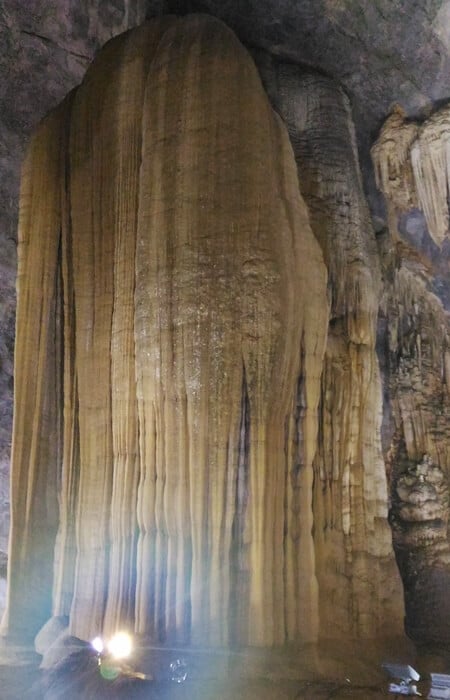
2-Day Private Car Itinerary from Hue to Phong Nha
Day 1: Hue to Phong Nha – A Journey to Vietnam’s Cave Kingdom
Departure Suggestion
Leaving Hue city center at around 8:30 AM is a good choice. You won’t need to start too early, yet you’ll still have plenty of time to reach Phong Nha, enjoy lunch, and begin exploring the caves in the afternoon without feeling rushed.
Your private car driver can pick you up directly from your hotel in Hue city center before departing for Phong Nha.
Driving Overview:
- Distance: 212–220 km, depending on your hotel location
- Driving time: Approximately 4–4.5 hours
- Estimated total time (driving and sightseeing): About 8 hours
- Road conditions: Mostly flat and easy to drive, with a few gentle uphill and downhill sections near Phong Nha.
Morning Journey
After about an hour and a half of driving, our first stop is Dong Ha Market, located in the center of Dong Ha City, Quang Tri Province. Although it isn’t a well-known tourist attraction, it’s a convenient place to take a 15–20 minute break after the first leg of the journey.
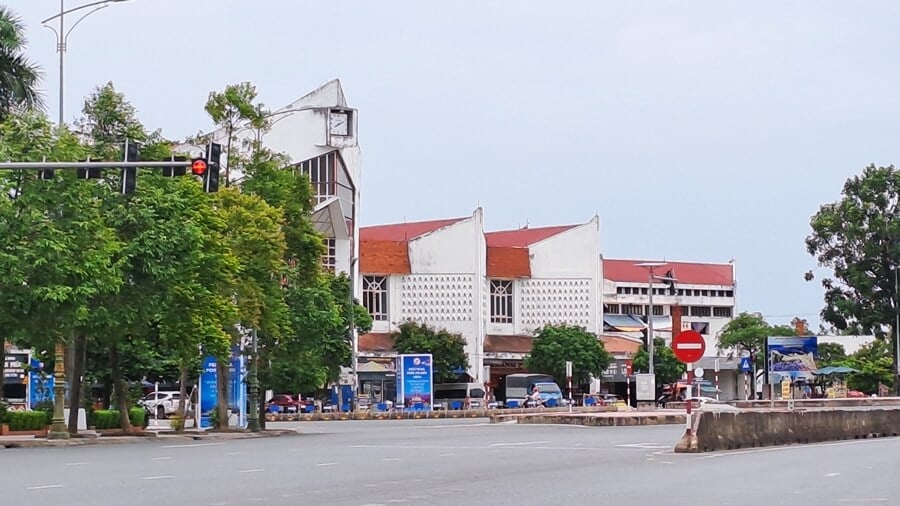
If you’ve visited Dong Ba Market in Hue, you’ll notice that Dong Ha Market has a very different atmosphere.
Located along the trade route linking the Lao Bao Border Gate, Quang Tri City, and Hue, the market sells a variety of goods imported from Laos or transported across the border for distribution throughout Central Vietnam. It offers a small but interesting glimpse into the everyday trading activities and local life in this less-touristy area.
The market also has public restrooms for travelers. While they aren’t as clean or comfortable as those in hotels, they’re perfectly adequate for a short stop. Just outside the market, you’ll find stalls selling bottled water and cold soft drinks, making it easy to refresh yourself before continuing the journey.
Leaving Dong Ha, the landscape begins to change noticeably. Open fields gradually give way to low hills covered with red basalt soil. Neatly planted rows of rubber trees line both sides of the road, interspersed with cassava fields stretching across the hillsides. Traffic also becomes lighter, creating a more relaxed drive as you gradually approach the mountains.
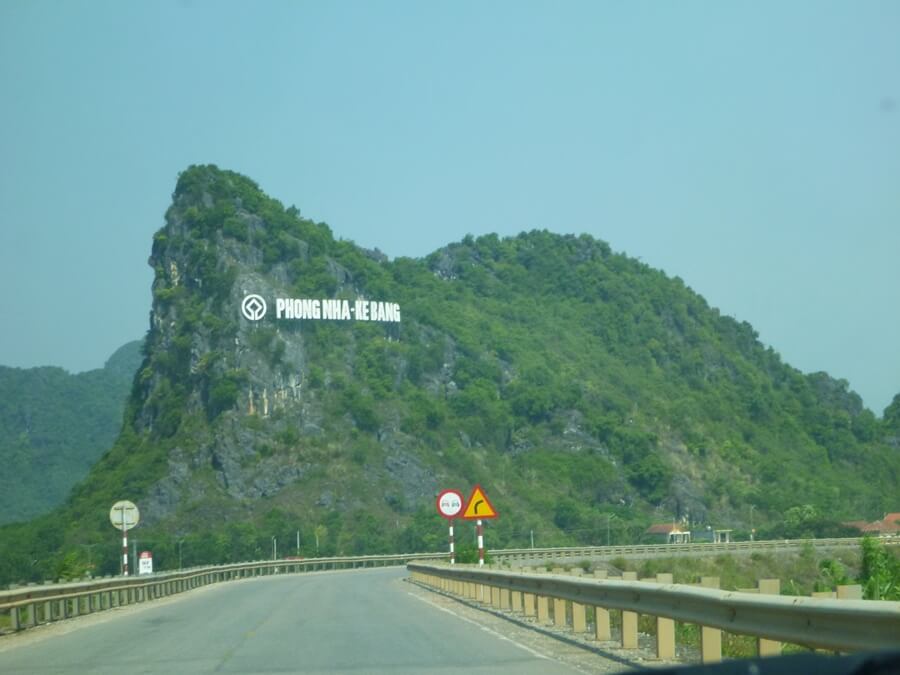
After another two to two and a half hours on the road, the scenery changes once again. Instead of the familiar rolling hills around Hue and Da Nang, rugged limestone mountains begin to appear, rising in layer after layer. These dramatic karst formations are one of the defining geological features of the Phong Nha region. They also signal that you’re approaching one of Asia’s largest and most spectacular limestone landscapes.
Lunch Stop
Arriving in Phong Nha around midday, you can stop at a local restaurant for lunch. It doesn’t have to be anything fancy. A simple meal of rice with braised pork, or a few slices of bread with a drink, is enough to recharge before spending the next few hours exploring the caves.
Afternoon Journey
In the afternoon, your driver will take you to the Phong Nha Boat Station. After purchasing your tickets, you’ll board a boat and cruise along the Son River to Phong Nha Cave, which is famous for its underground river flowing through the limestone mountains. Then, the visit continues to Tien Son Cave, a dry cave located higher up the mountainside.
It’s worth noting that visiting Tien Son Cave requires climbing a considerable number of stairs. For this reason, it’s better suited to travelers in good physical condition. If you’re over 65 or have knee, heart, or mobility issues, you may want to consider skipping this part of the visit.
In our opinion, the stalactites and stalagmites in Tien Son Cave are still impressive. Although Phong Nha Cave was once regarded as one of the most beautiful caves in the region, many of its rock formations no longer create the same sense of wonder as many caves discovered later within Phong Nha–Ke Bang National Park. Even so, the experience of traveling deep into the mountain by boat along an underground river remains one of the most unique highlights of the journey, something that completely dry caves simply cannot offer.
If you visit during the dry season, generally from April to September, the Son River is usually a beautiful shade of clear blue, except for a few days after heavy rainfall when the water becomes muddy. As the boat glides along the river, you’ll enjoy views of towering limestone cliffs, green cornfields, and scattered homes belonging to local families. It’s a short but peaceful moment before entering the underground world of the caves.
The cave visit typically lasts 3 to 4 hours, during which your car driver will wait at the parking area. Once your visit is over, you’ll be driven to your hotel in Phong Nha to check in and relax for the evening.
Arrival Flow
We recommend staying in the Phong Nha area rather than returning to downtown Dong Hoi. Although Dong Hoi offers a wider selection of hotels, restaurants, and a livelier evening atmosphere, it’s about 60–70 km from Phong Nha. Making the extra trip not only adds unnecessary driving time but also means returning to Phong Nha the following morning to continue exploring the caves.
Besides, staying in Phong Nha allows for a more relaxed start to the second day while significantly reducing travel time.
One thing to keep in mind is that Phong Nha becomes quite quiet after dark. There are fewer restaurants than in Dong Hoi, and many local businesses close early. For that reason, we recommend choosing a hotel or farmstay that serves dinner on-site, so you won’t need to search for a restaurant in the evening.
After about 7:00 PM, many roads around Phong Nha become quiet and are less well lit than those in larger cities. Unless you have a specific reason to go out, we recommend spending the evening relaxing at your accommodation rather than walking or driving around the area.
After a long day on the road and several hours of cave exploration, it’s the perfect opportunity to unwind and get a good night’s rest before the next day’s adventure.
Day 2: Paradise Cave, Mooc Stream, and Departure to Dong Hoi
Departure Suggestion
We recommend departing at around 8:00 AM. This allows for an unhurried start to the day while giving you plenty of time to complete the itinerary without rushing to catch a later flight or train.
In the early morning, Phong Nha is often covered in mist, especially on humid days. If you arrive at the cave too early, when there are very few visitors, the interior may feel exceptionally quiet and a bit chilly, which some travelers may find somewhat lonely.
By then, the morning light is usually clearer, making it easier to enjoy the limestone mountains and take photos along the way.
Driving Overview:
- Distance: 90–100 km
- Driving time: Approximately 2–2.5 hours
- Estimated total sightseeing and travel time: About 7–7.5 hours
- Road conditions: Good road conditions throughout, except for a short winding stretch near Paradise Cave.
Morning Journey
From your hotel in Phong Nha, the journey continues to Paradise Cave, located about 25–30 km away.
The road to the cave is an enjoyable drive along a two-lane road that winds through limestone mountains and natural forests.
Along the way, you’ll occasionally pass cornfields cultivated by local families for both food and livestock feed. You may also spot cows or water buffalo grazing peacefully in the nearby fields, adding to the tranquil countryside scenery.
If you’d like to stop for photos, we usually recommend stopping just before Trooc Bridge. This is one of the most scenic stretches of road in the Phong Nha area, featuring distant limestone mountains, open cornfields, and wide-open landscapes.
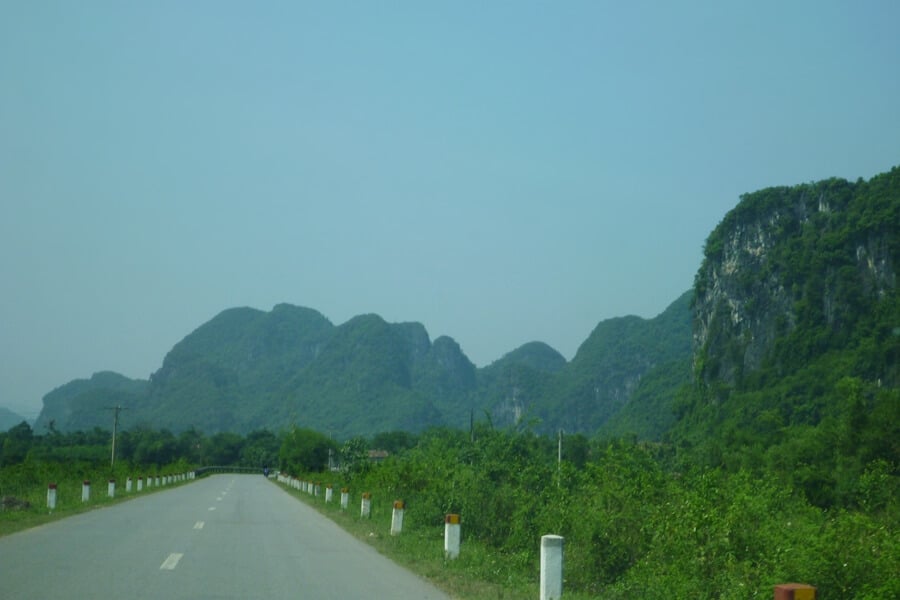
If weather and traffic conditions permit, your driver will choose a suitable place to pull over. Although this road is generally quiet, some vehicles travel at relatively high speeds, so please use caution when crossing the road or stopping to take photos.
After about 40 minutes of driving, you’ll arrive at the Paradise Cave parking area.
One small thing to keep in mind: the final 2–3 km before the parking area follows a narrow concrete road with several short but fairly steep inclines. The car may bounce slightly or make a few sudden uphill and downhill movements, so it’s best to keep your seatbelt fastened until the vehicle comes to a complete stop.
The parking area has public restrooms, refreshment stands, and souvenir shops. It is a convenient place to take a short break before beginning your cave exploration.
Paradise Cave Exploration:
From the ticket office to the base of the mountain is about 1 km. We recommend taking the round-trip electric buggy instead of walking to save both time and energy.
After getting off the buggy, you’ll continue on foot to the cave entrance. There are two options:
- The first is a fairly steep staircase, which provides a quicker climb but requires more physical effort.
- The second is a winding zigzag path along the hillside. It’s less steep and generally easier to walk, but longer route.
At Vietnamdrive, we usually recommend taking the zigzag path on the way up and the staircase on the way down. This approach helps conserve energy, especially during the summer. Although the forest provides plenty of shade, the dense trees also block much of the breeze, so the air can still feel warm and humid.
There is a seating area just outside the cave entrance. If you’ve just finished the climb, don’t rush into the cave. Instead, take about 10 minutes to rest and cool down. It is because the temperature inside Paradise Cave is much lower than outside, often 9–16°C cooler. Giving your body a chance to adjust gradually will make the visit much more comfortable.
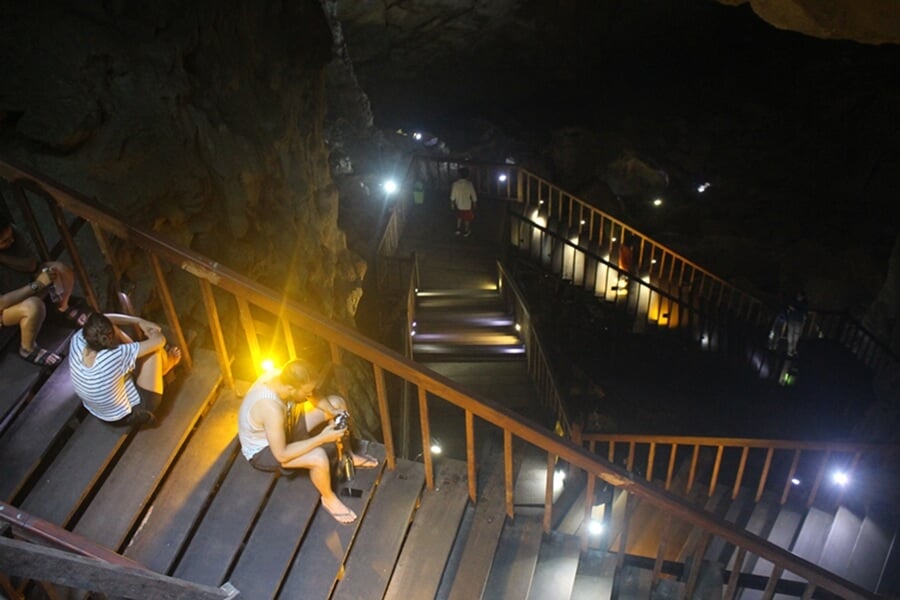
Inside, you’ll find a vast cave filled with spectacular stalactites and stalagmites that have formed over millions of years. The lighting is carefully designed to highlight the cave’s remarkable formations while preserving its natural beauty.
If you plan to take photos, it’s worth bringing a phone or camera that performs well in low-light conditions to capture the cave’s impressive scenery.
The visit typically lasts about 3 hours, during which your driver and private car will wait in the parking area to be ready for the next destination.
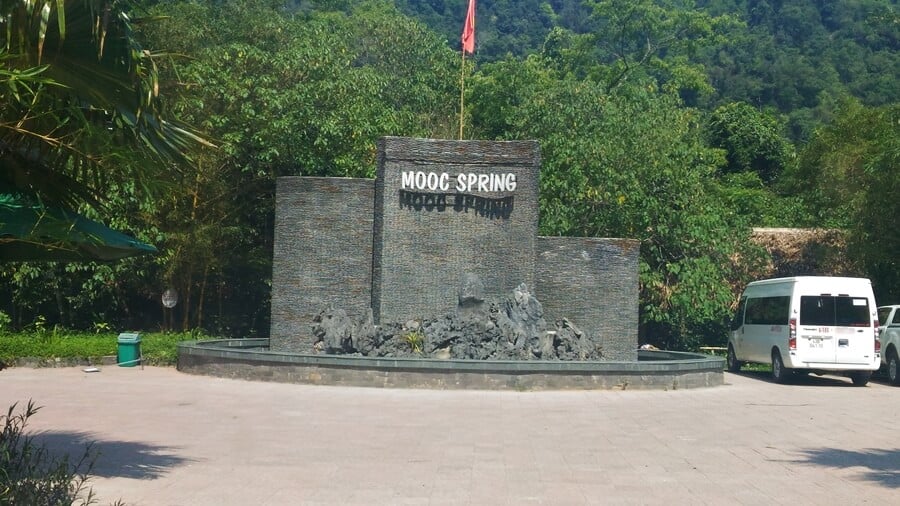
After leaving Paradise Cave, the journey continues with about a 10-minute drive to Mooc Stream.
Lunch Stop
This is usually the perfect time to stop for lunch.
Rather than eating near Paradise Cave, we usually recommend having lunch at Mooc Stream. Although there is also a restaurant at the Paradise Cave parking area, the setting doesn’t offer the same relaxing atmosphere as dining under the trees beside the cool stream.
After nearly three hours of walking, climbing, and exploring the caves, most travelers begin to feel tired and ready for a break. That’s why we schedule Mooc Stream immediately after Paradise Cave, not just for lunch, but also to give your body time to rest and recover before continuing the journey to Dong Hoi.
You may want to try grilled chicken with sticky rice, a popular local dish of the limestone mountain region in Phong Nha – Ke Bang.
After lunch, there’s no need to head back to the car right away. The afternoon is yours to enjoy Mooc Stream before continuing to Dong Hoi.
Afternoon at Mooc Stream
The rest of the afternoon is devoted to enjoying Mooc Stream at your own pace.
You can stroll along the stream, relax beneath the shade of the trees, or take part in a variety of water activities. Many visitors choose to kayak or simply soak their feet in the cool water after a morning of cave exploration.
Most travelers spend about two hours here, although the length of your visit can be adjusted depending on the departure time of your flight or train.
From Mooc Stream, it’s about 60–65 km to Dong Hoi Airport or Dong Hoi Railway Station, with a driving time of approximately 1 hour and 30 minutes.
If you’re flying, we recommend leaving Mooc Stream about 3 hours before your flight.
If you’re traveling by train, departing about 2 hours and 30 minutes before your train usually provides a comfortable amount of time.
Arrival Flow
Your driver will take you to Dong Hoi Airport or Dong Hoi Railway Station at the scheduled time, marking the end of your two-day journey from Hue to Phong Nha by private car.
For many travelers, however, this is not the end of their journey through Vietnam. Dong Hoi is a convenient transportation hub for continuing north to destinations such as Ninh Binh, Hanoi, and other provinces by plane or train.
If your schedule allows, you may also want to spend another day or two in Phong Nha – Ke Bang to explore more of the region’s caves and natural landscapes. As one of Vietnam’s largest national parks, there’s still plenty more to discover before continuing your trip.