
3-Day A Luoi and DMZ Road Trip from Da Nang
The itinerary below outlines each day’s driving route, recommended stops, and practical travel tips.
Day 1: Da Nang to A Luoi via National Highway 14
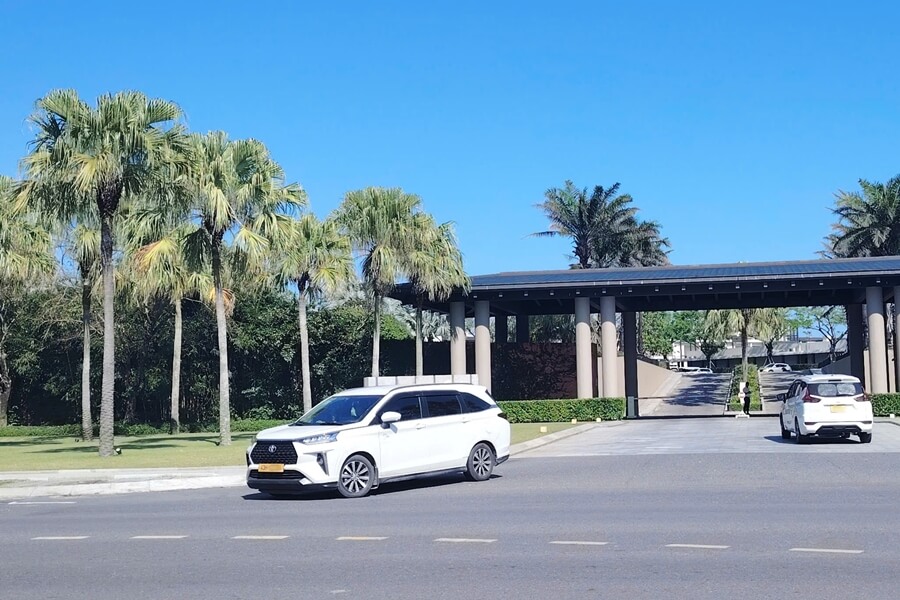
Departure Suggestion
You can take a relaxed start today.
We generally recommend leaving your hotel in central Da Nang at around 8:30 AM.
If you prefer to start later, that’s perfectly fine, but we recommend departing no later than 10:00 AM. This gives you plenty of time to enjoy the stops along the way without arriving in A Luoi too late.
Please note that if you depart from the InterContinental on Son Tra Peninsula at the same time, you’ll reach the start of the route about 20 to 30 minutes later than travelers departing from central Da Nang.
Driving Overview:
- Estimated driving time: About 5 hours, or approximately 7 hours in total, including photo stops and rest breaks.
- Total distance: Approximately 190 km (118 miles).
- Route highlights: A scenic drive through rolling hills and mountainous landscapes.
Morning Route Process
Depending on your hotel’s location, our driver will choose either the Ba Na Suoi Mo route or National Highway 14G to leave Da Nang. Both routes are generally easy to drive and offer a comfortable start to the journey.
After about two hours on the road, the driver will stop at Prao Cafe in the town of Prao for a short break. It’s a rustic local cafe with restroom facilities. While the restrooms aren’t comparable to those in hotels, they are perfectly adequate for a quick stop during your journey through the mountains and forests.
Enjoying a cup of coffee and relaxing in this quiet mountain town offers a refreshing contrast to the bustling city of Da Nang. Here, the sea breeze gives way to fresh mountain air.
After a 20 to 30 minute break, the journey continues along National Highway 14, leading deeper into the secluded mountain landscapes. Along the way, you’ll pass forested mountains on one side and a landscape of deep valleys and rolling mountain slopes on the other.
On sections of National Highway 14G and National Highway 14, you’ll encounter numerous winding mountain roads with sharp curves. Please keep your seatbelt fastened at all times. Also, avoid leaving open drinks in the vehicle, as they may spill during the drive.
Occasionally, you’ll see a few international travelers riding motorbikes along National Highway 14. Along the way, you’ll notice open areas on the hillsides where trees have been cleared for farming, or where melaleuca plantations have recently been harvested and have not yet been replanted, leaving patches of bare ground.
You may also come across sections where the slopes beside the road look unstable. During the rainy season, especially from November to February, landslides can occur in some areas. For this reason, this may not be the ideal time to travel, as heavy rain can cause unexpected road closures or delays.
The highway has only two lanes, one in each direction. As a result, traffic can sometimes slow down when trucks transporting melaleuca logs are traveling along the route.
Fortunately, most of the journey passes through sparsely populated mountain areas, so there are relatively few vehicles, motorbikes, or pedestrians on the road. In many sections, passing is permitted, allowing drivers to overtake slower trucks when conditions allow.
In some places, the road cuts through the hills, a reminder of the effort to connect these remote mountain communities.
Most of the houses along this route are small, single-story homes with corrugated metal roofs. Traditional wooden stilt houses are much less common than they once were. This is likely because timber has become more expensive and logging is more tightly regulated.
Lunch Stop Along the Journey
We’ll stop at a small roadside cafe or a quiet spot along the route to take a break and enjoy a light lunch.
There are very few restaurants along this route that meet the expectations of most international travelers. Thus, we recommend bringing snacks, sandwiches, or pastries with you. If you don’t have anything prepared, ask your driver to stop at a convenience store in Da Nang before leaving the city.
Another choice is the cafe where our drivers typically stop for lunch is located in the A Roang Community-Based Tourism area, A Roang 2 Hamlet, A Luoi, Hue City. We chose this location because it’s a suitable place to rest after driving about 75 km (47 miles) from Prao through winding mountain roads.
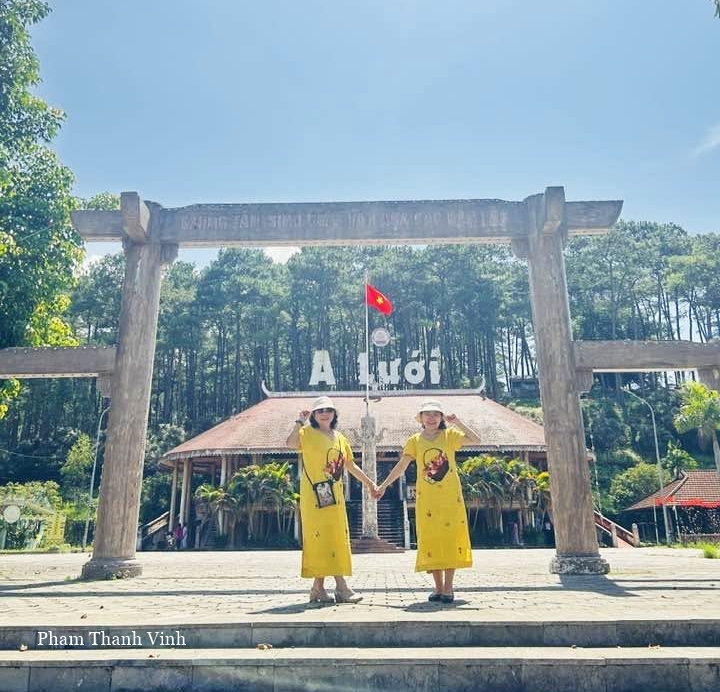
The area also has a community center that showcases handicrafts made by local ethnic minority communities. You can stop to browse and purchase souvenirs if you’d like. Although it is promoted as a tourist destination, the Vietnamdrive team found that it is still quite basic and in the early stages of development. Facilities and visitor services are limited, and most activities must be arranged in advance.
Afternoon Journey
After a short break, we continue our drive to A Luoi, traveling through lush mountains and forests filled with the fresh scent of nature.
The remaining distance to our overnight stop is only about 30 km (19 miles), so there’s no need to rush. Take your time and enjoy the scenery along the way.
We arrive in A Luoi in the late afternoon and check in for the night.
Arrival Flow
We expect to arrive at around 3:00 PM.
Because tourist facilities in this area are still limited, we recommend staying at Ngoc Tram Homestay, one of the largest and best equipped accommodations in A Luoi. The owners are friendly, and several local restaurants are located within about 300 meters (980 feet).
After checking in, we suggest spending the rest of the day relaxing after the drive. Enjoy a cup of tea, take in the peaceful mountain atmosphere, or go for a short walk to observe daily life in the town.
If you decide to explore on foot, we recommend staying within the town center and avoiding private property.
Evenings in A Luoi are generally quiet, and services are minimal. If you’d like to have dinner at a local restaurant, ask your driver to accompany you. They can help you communicate and place your order, as many local residents do not speak English. We also recommend choosing freshly cooked dishes and avoiding raw vegetables during this trip.
Day 2: A Luoi to Khe Sanh
The second day continues through the hills and mountains of the Truong Son Range. Throughout much of the journey, you’ll be traveling not far from the Vietnam-Laos border.
Suggested Departure Time
Today’s drive is relatively short, so you have some flexibility when deciding when to leave.
If you depart at around 6:00 AM, you’ll enjoy quieter roads and may have the chance to admire the morning mist drifting through the mountains. In some valleys, it can even feel as though you’re driving above the clouds.
For most international travelers who prefer a more relaxed pace, however, we recommend departing at around 7:30 AM. This allows for a leisurely morning while enjoying the cool, fresh mountain air.
Although 7:30 AM is still an early start compared with many other itineraries, it gives you enough time to have breakfast before setting off. Keep in mind that accommodations in this area often do not provide breakfast. So, we’ll need to find a hearty breakfast and a strong cup of coffee to keep you energized for the rest of the day’s journey.
Morning Journey
A few minutes after leaving our accommodation, we head into the center of A Luoi for a hot bowl of pho to start the day. As mentioned earlier, we recommend choosing hot pho, even during the summer, because it is freshly prepared and thoroughly cooked.
We usually stop at Pho Thuy Anh (also known as Pho Tung), located at 8 Truong Son Street, A Luoi, Hue City. It is one of the cleaner local restaurants, with tables and seating that are comfortable for international travelers.
After breakfast, we stop at a local coffee shop for a strong cup of Vietnamese Robusta coffee to help keep you energized for the drive. We recommend Rich Coffee A Luoi, also located in the town center, with convenient parking.
Before leaving town, we also suggest stopping by A Luoi Market, about 1 km (0.6 miles) away, to buy some fresh fruit or snacks for the journey.
The Vietnamdrive team estimates that breakfast, coffee, and a quick visit to the market will take a little over an hour, and you’ll still be within the center of A Luoi.
Before leaving town, we also stop for photos in A Luoi’s central square. The modern architecture, set against a backdrop of mountains and forests, reflects the town’s ongoing transformation and its aspirations for future development.
We then continue along the roads crossing the Truong Son mountain range, historically known as the Truong Son Road and now part of the Ho Chi Minh Highway. During the Vietnam War, this route was part of the famous Ho Chi Minh Trail, which passed through dense jungle and played an important historical role.
Several ethnic minority communities, including the Pa Co, Ta Oi, and Van Kieu peoples, live along this route.
A word of caution: About 10 minutes after leaving the center of A Luoi, you’ll encounter several sections where the asphalt pavement transitions to concrete, creating a bumpy ride. If you’re taking photos with your phone, we recommend using a wrist strap or holding it securely. During one of our trips, we saw a phone fall because of the rough road surface.
About 30 minutes later, you’ll begin crossing Pe Ke Pass in A Luoi. The pass lies near the border between the Hong Thuy and Hong Van communes and is about 90 km (56 miles) from the center of Hue. However, our journey continues much farther northwest toward Khe Sanh rather than returning directly to Hue. Khe Sanh was once one of the most important locations in the former DMZ region.
From the summit of Pe Ke Pass, you can look down into the valley and see mountain ranges stretching to the horizon. Surrounded by vast forests and rugged peaks, many visitors feel both humbled and immersed in nature. If conditions allow, your driver can stop briefly at one of the viewpoints so you can take photos before continuing the journey.
As you approach Hong Thuy Bridge, you’ll enjoy beautiful views of the stream below, making it a great spot for photos and sightseeing. However, vehicles are not allowed to stop on the bridge. If you’d like to take pictures, your driver will need to park a short distance beyond the bridge, and you have to walk back. If you simply want to enjoy the scenery from the vehicle, there’s no need to stop, but be aware that the short bridge can pass by quickly and is easy to miss.
The car trip continues. This stretch of the route crosses numerous streams and rivers, so you’ll encounter several bridges, including A Cho Bridge and Hong Thuy Bridge. During the rainy season, water levels are higher and the current is much stronger. In the dry season, from May through October, the streams are generally calmer.
If you plan to get close to the streams or spend an extended period nearby, such as camping, be aware that water levels can rise suddenly after afternoon thunderstorms, even during the dry season.
Lunch Break at Dak Rong Bridge
The journey carries on, and after about two hours, we’ll arrive at Dak Rong Bridge, where the road to Hue branches off from the route to Lao Bao and Khe Sanh. We’ll stop here to take a few commemorative photos, as Dak Rong Bridge is a historic landmark that marks an important gateway to the southern part of Quang Tri Province.
This is also where we’ll stop for lunch.
We’ll have lunch at the Tram Bau Rest Stop, located at the entrance to Dak Rong Bridge. It’s a convenient place to relax and recharge before continuing the journey. If possible, choose a table overlooking the Dak Rong River for a more peaceful and enjoyable break.
Afternoon Journey
After lunch, we turn left and continue toward Ta Con Air Base in Khe Sanh. The road gradually climbs as we approach the site. Ta Con was selected as a military base because of its strategic elevation, which allowed aircraft to operate efficiently in the DMZ and monitor routes between Quang Tri, Lao Bao, and across the border into Laos.
Although the distance from Dak Rong Bridge to Ta Con is only about 25 km (16 miles), the drive typically takes 45 minutes to an hour because of the continuous uphill sections.
Plan to spend about 30 minutes exploring the site.
Note: Near the entrance, you’ll usually find a few small plastic tables and chairs where visitors can sit and enjoy a drink. After walking through the airfield, museum, and bunkers under the sun, many travelers take a short break here.
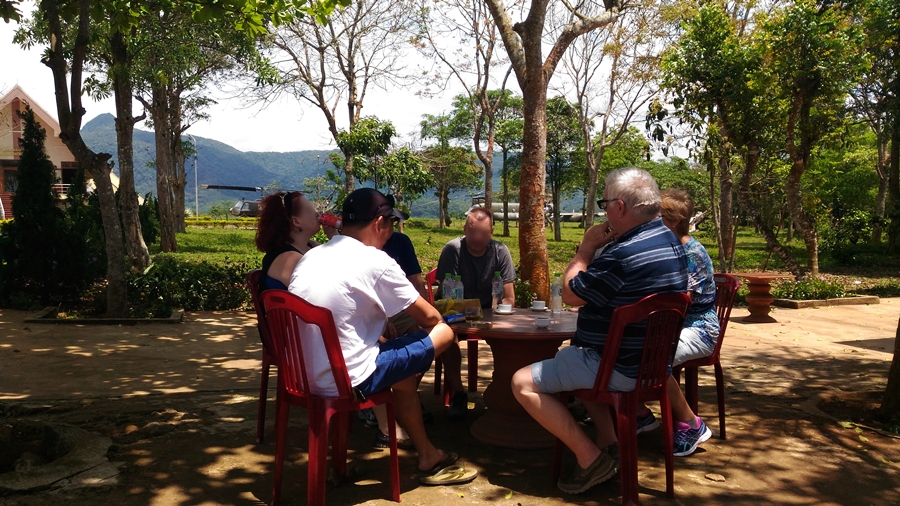
It is also a quiet moment to reflect on the history of the Vietnam War. From the seating area, you can look across the grounds and observe the remaining traces of the past.
After visiting Ta Con, continue about 20 km (12 miles) toward the Lao Bao Border Gate. This is a well traveled route for people from Quang Tri and Hue who are crossing into or returning from Laos by road.
Arrival Flow
We recommend staying near the Lao Bao Border Gate rather than in Khe Sanh town, as there are a few better hotel options in the border area, along with a duty free shopping area that was especially popular about a decade ago.
After checking in, you can relax, take a stroll, or browse the duty free shops. In the evening, enjoy a quiet dinner near the Vietnam-Laos border, where the illuminated border gate stands peacefully against the night sky.
The area is generally quiet, with little evening activity. Most travelers choose to turn in early and get a good night’s rest before the next day’s long drive.
Day 3: Lao Bao to the DMZ, Vinh Moc, and Hue
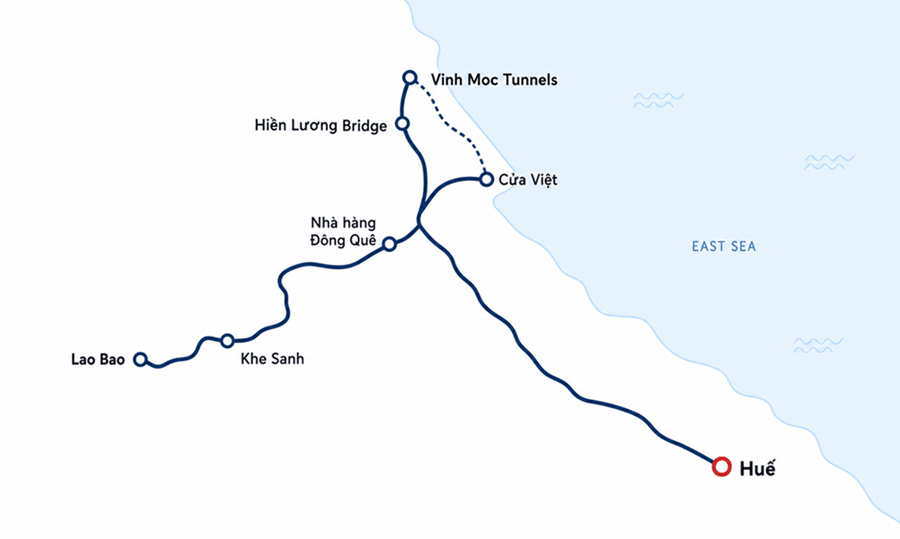
Unlike the previous two days, which followed east-west and south-north routes, today’s journey heads east from Lao Bao before turning south toward Hue. One of the highlights of the day is traveling along the 17th parallel, once designated as the Demilitarized Zone (DMZ) that divided Vietnam.
Suggested Departure Time
We recommend departing at around 7:30 AM. This timing is not so early that the border area is still covered in mountain mist, yet early enough to enjoy a warm bowl of pho before setting off on the day’s journey.
Today’s Driving Overview:
- Estimated driving time: 5-6 hours
- Estimated total travel time: 7 – 8 hours for visiting and resting
- Total distance: Around 226 Km
- Road conditions: Mostly hilly roads in the morning, followed by paved rural roads and National Highway 1A.
Morning Journey
After breakfast, you can spend a little time around the Lao Bao area. If the local pho restaurants are closed, we’ll head directly to Khe Sanh town for breakfast and a cup of coffee.
We then begin our drive toward the plains. Unlike yesterday’s route, the first 50 km (31 miles) is mostly downhill, following the Da Krong River. For the best views, we recommend sitting on the right side of the vehicle.
Along the 17th parallel lies one of the landmarks that almost every visitor to the DMZ hopes to see: Rockpile. This dramatic rocky outcrop rises above a forested valley and once served as an important military observation post. Vehicles cannot drive to Rockpile itself, but your driver can stop at a suitable viewpoint along the road so you can admire it from a distance.
About one hour after leaving the Rockpile, we’ll reach one of Vietnam’s most important historical landmarks from the period between 1954 and 1975: Hien Luong Bridge, which spans the Ben Hai River. During the division of Vietnam, this bridge served as an important crossing point and symbol of communication between North and South Vietnam.
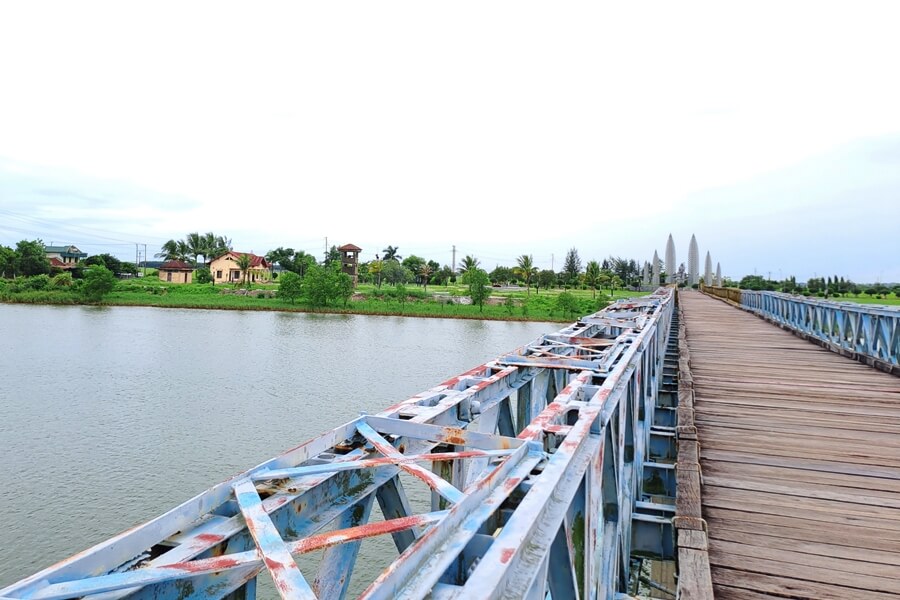
Take time to walk around the historic site, visit the flag tower, and cross the restored wooden Hien Luong Bridge over the Ben Hai River.
After about 25 minutes of driving, we’ll arrive at Vinh Moc, home to the famous Vinh Moc Tunnels, located at Cua Tung Beach. Unlike the Cu Chi Tunnels, the tunnels at Vinh Moc are taller, making them easier to walk through. Even so, international visitors should still watch their heads in some sections to avoid bumping into the ceiling.
When you arrive at Vinh Moc, your vehicle will be waiting in the parking area near the ticket entrance.
If you walk to the left, you’ll find the public restrooms, which you can use before or after your visit. Although they are usually free, you’ll often see a donation box at the entrance, so it’s a good idea to have some small change with you.
After spending about 45 minutes exploring the tunnels and museum, many of our guests enjoy taking a short break at the small food stalls near the parking area. The stalls are simple but neatly organized, and the vendors are friendly. We especially like the bamboo-shaded seating areas, where you can relax and enjoy the cool breeze. A chilled soft drink or a fresh coconut is all you need before continuing the journey.
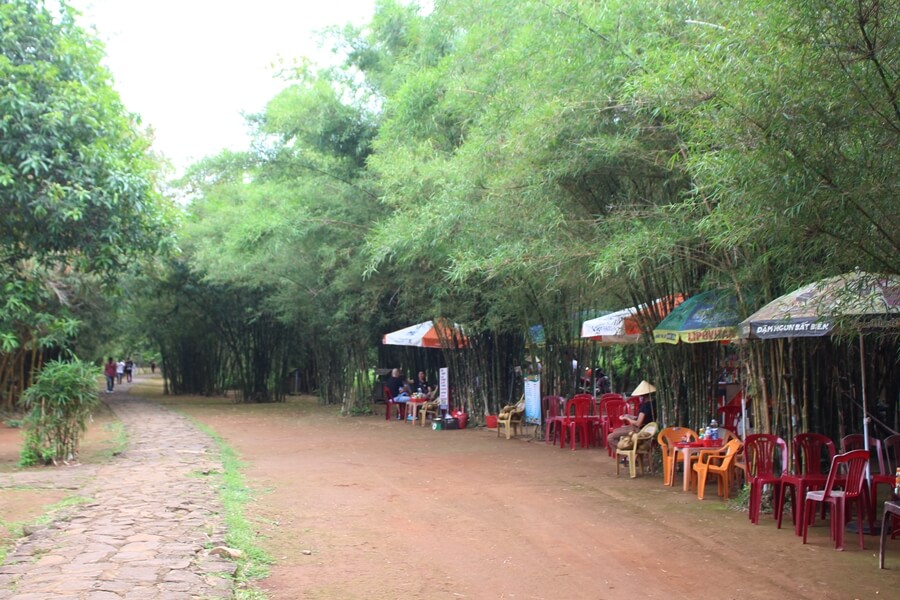
From there, we continue south along the peaceful coastline of Quang Tri. Much of this coastal route remains undeveloped for tourism, with only a handful of small restaurants and guesthouses near the turnoff to Quang Tri City.
This is where you’ll begin to notice the contrast between the cool mountain landscapes of the previous two days and the windswept coastline of Quang Tri.
Lunch Stop Along the Way
Continuing the journey, we stop at the rustic Dong Que Restaurant, a popular lunch stop for day trip visitors exploring the DMZ from Hue. Compared with the restaurants we visited along the Ho Chi Minh Highway over the past two days, this restaurant offers friendlier service and a setting that is more familiar to international travelers.
The menu includes both Vietnamese and European dishes. While the European options are available, they are fairly simple, and you’ll find better versions at many restaurants in Hue.
After about one hour to relax and enjoy lunch, we continue the journey.
Afternoon Journey
For the remainder of the trip, we travel mostly along the busy National Highway 1A. Although it is Vietnam’s main north-south highway, many sections outside the cities are relatively open, allowing for a smooth and efficient drive.
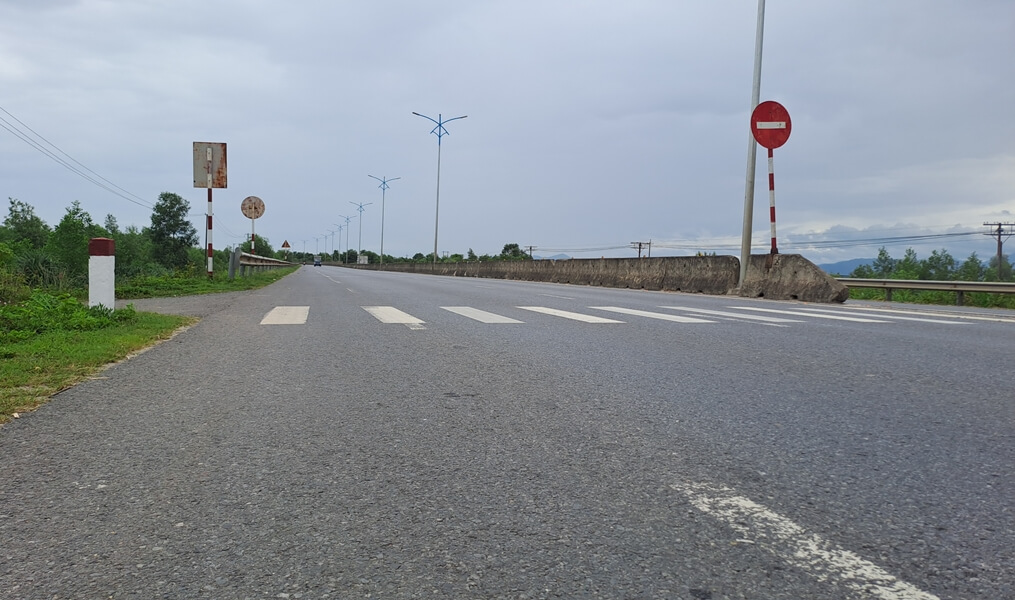
Along the 75 km route between Quang Tri and Hue, you’ll pass through a stretch of white sandy terrain, much of it planted with cashew trees, one of Vietnam’s important export crops. Scattered among the villages are small, divided fields, creating a striking contrast with the vast rice paddies of the Mekong Delta.
This is the longest continuous drive of the day. After nearly two hours on the road, you’ll arrive in Hue.
Arrival Flow
Your driver will take you directly to your pre-booked hotel in Hue. We recommend staying at a hotel along the southern bank of the Perfume River, such as Sai Gon Morin, Huong Giang, or La Residence. These locations provide easy access to evening walks along the river and a wide selection of nearby restaurants.
Your driver will drop you off at your hotel, marking the end of your 3-day journey from Da Nang through the Ho Chi Minh Highway, A Luoi, and the DMZ to Hue.
The rest of your time is yours to enjoy. Hue is not a city to rush through, so slow down and take in its peaceful atmosphere.
In the evening, stroll along the banks of the Perfume River, enjoy the cool breeze, and experience the relaxed lifestyle of local residents gathering by the waterfront.
Stopping at a riverside cafe and watching the gentle flow of the Perfume River is a favorite way for both locals and visitors to unwind.